
Learning how to use a wheelchair safely and effectively is essential for maintaining independence, preventing injury, and ensuring long-term comfort. Whether you’re using a manual or power wheelchair—temporarily after surgery or as part of daily life—mastering the basics of operation, transfers, and maintenance can make all the difference. This guide covers every critical skill: from choosing the right chair and adjusting it properly, to propelling smoothly, transferring safely, navigating curbs and ramps, and avoiding common injuries like pressure sores and shoulder strain.
You’ll learn step-by-step techniques backed by physical therapists and mobility specialists, including how to move forward and backward, turn with precision, and handle real-world obstacles. With the right knowledge and practice, using a wheelchair becomes not just manageable, but empowering.
Let’s begin with selecting the correct type of wheelchair for your needs.
Choose the Right Wheelchair for Your Mobility Needs

The first step in learning how to use a wheelchair is choosing one that matches your physical abilities, lifestyle, and long-term goals. The wrong chair can lead to discomfort, inefficiency, or even injury.
Manual vs. Power Wheelchairs: Key Differences
Manual wheelchairs rely on upper body strength to propel the chair via hand rims. They’re lightweight, affordable, and ideal for users who can move independently.
Power wheelchairs use a motor and joystick control, making them perfect for individuals with limited arm strength, endurance, or paralysis.
For active, independent users, a lightweight manual wheelchair with a rigid frame reduces shoulder strain and improves propulsion efficiency.
Types of Manual Wheelchairs and Their Uses
- Standard manual: Foldable, basic design—best for short-term use or when a caregiver assists.
- Active manual: Lightweight, customizable—ideal for daily self-propulsion.
- Transport wheelchair: Small wheels, pushed only by a caregiver—never meant for self-propulsion.
- Reclining or tilt-in-space: Adjustable backrests and leg rests—help with pressure relief and medical positioning.
- Custom (CRT): Medically prescribed and tailored to posture and medical conditions—used for long-term disabilities.
- Pediatric models: Sized for children, often used post-surgery or during illness.
Expert tip: Always consult a physical or occupational therapist before choosing. They assess your strength, balance, and daily routines to recommend the best fit.
Adjust Your Wheelchair for Optimal Fit and Comfort
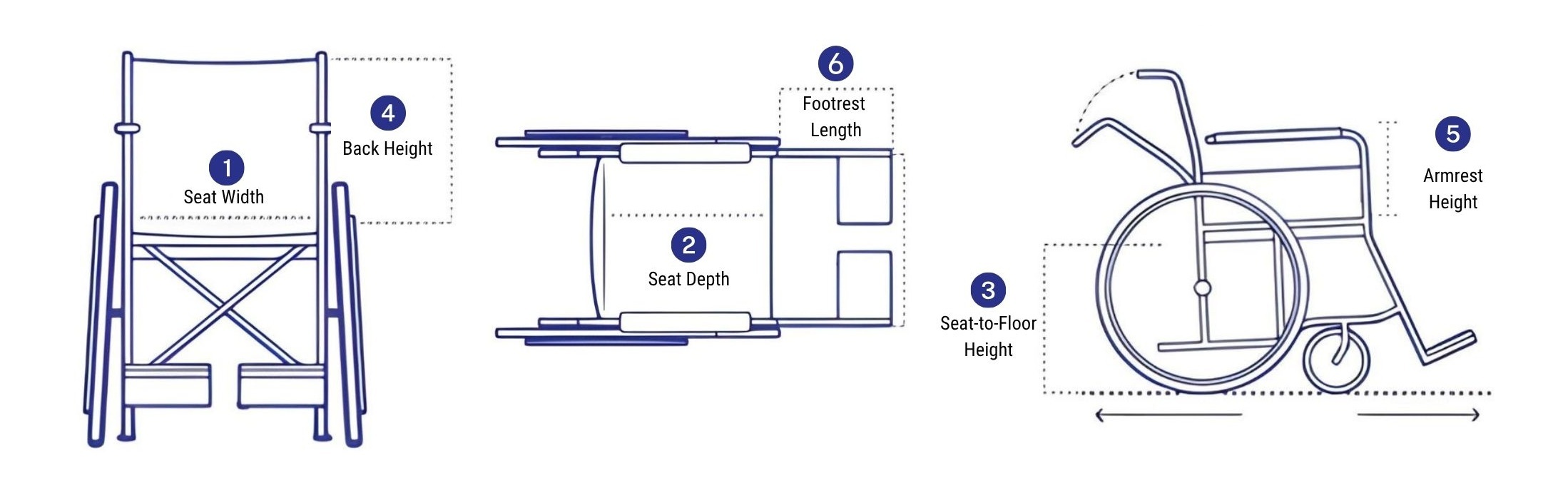
A poorly fitted wheelchair can cause pain, inefficient movement, and long-term joint damage. Proper adjustments ensure better posture, easier propulsion, and reduced risk of injury.
Set Correct Seat Width and Depth
- Seat width should be your hip width plus 1–2 inches.
- Too wide → harder to reach hand rims.
- Too narrow → pinching or difficulty sitting.
- Seat depth must support your thighs without pressing behind the knees.
Position the Backrest and Armrests Correctly
- Backrest height should allow free shoulder movement during pushing.
- Armrests should let your elbows rest at a 90-degree angle when seated.
- Use flip-back or removable armrests for easier transfers.
Align Footrests and Use Heel Loops
- Feet should rest flat with knees slightly lower than hips.
- Adjust footplate height so there’s a finger’s width between the seat edge and back of the knee.
- Use heel loops to prevent foot drop and keep feet secure.
Optimize Center of Gravity for Easier Movement
- Rear axle position affects stability and effort required to push.
- Forward axle: Easier to propel but less stable.
- Rearward axle: More stable but harder to push.
- A therapist can fine-tune this to reduce shoulder strain and improve efficiency.
Pro tip: Custom rehab wheelchairs require professional measurement. Never guess—improper fit leads to long-term musculoskeletal problems.
Set Up and Fold the Wheelchair Safely
Knowing how to unfold and fold your wheelchair correctly prevents damage and keeps you safe during transport and storage.
How to Unfold a Wheelchair
- Hold both armrests or frame sides.
- Pull outward while pressing down on the frame.
- Listen for a click—this means the frame is locked.
- Reattach footrests and check that brakes are off.
Visual cue: The X-shaped frame should sit flat and rigid—no wobbling.
How to Fold a Wheelchair
- Remove footrests:
– Press the silver lever under each footrest.
– Swing outward and lift straight up. - Grasp the seat fabric at front and back.
- Pull upward to lift the seat, then push the side rails down and outward.
- Keep fingers clear of hinges.
Warning: Never fold while seated. Always remove legs and arms first.
Operate the Brakes Correctly for Safety
Brakes (wheel locks) are essential for stability—especially during transfers.
How to Engage and Release Brakes
- To lock: Push brake lever forward until it clicks into the wheel notch.
- To release: Pull lever back toward you.
Always lock brakes before sitting down, standing up, or transferring to another surface.
Important: Brakes are not for slowing down while moving. Use hand rim friction instead.
Propel the Wheelchair with Control and Efficiency
Proper propulsion technique protects your shoulders and conserves energy.
Move Forward Smoothly
- Grip the hand rims just behind your hips.
- Push forward and downward with both hands.
- Release and return hands to start—repeat in a smooth rhythm.
Pro tip: Use gloves to prevent blisters and improve grip, especially on long pushes.
Move Backward Safely
- Grip the front part of the hand rims.
- Pull back and down to roll the wheels in reverse.
Caution: Look behind you first. Use a spotter if you’re new to backward movement.
Turn with Precision in Tight Spaces
- Turn right: Hold the right wheel still, push the left wheel forward.
- Turn left: Hold the left wheel still, push the right wheel forward.
- For tight turns, use “differential pushing”—small pulses on one side.
On slopes, go slow. Gravity increases speed downhill and reduces power uphill.
Transfer In and Out of the Wheelchair Safely
Safe transfers prevent falls and protect your body.
Sit Down Into the Wheelchair
- Lock both brakes.
- Remove or swing away footrests.
- Back up until legs touch the seat.
- Use armrests for support.
- Lower yourself slowly and sit back fully.
Stand Up from the Wheelchair
- Lock brakes.
- Remove footrests.
- Place hands on armrests.
- Lean forward—this shifts your center of gravity.
- Push up using arms and legs.
- Step forward, avoiding the footplates.
Never rush. Take your time to avoid tripping or losing balance.
Transfer to Bed, Chair, or Toilet
- Position the wheelchair at a 45 to 90-degree angle to the target surface.
- Lock brakes and ensure stability.
- Use a transfer board or grab bars if needed.
- Avoid 180-degree (opposite side) transfers—they increase fall risk.
Expert advice: Practice with a therapist first. They’ll teach you the safest method based on your strength and mobility.
Navigate Curbs and Ramps with Confidence
Outdoor mobility requires skill and caution.
Go Up a Curb (With Caregiver)
- Face the curb—front wheels close to the edge.
- Caregiver leans chair back slightly to lift front wheels.
- Push forward and lift attendant handles to roll rear wheels up.
Independent curb climbing is advanced. Only attempt with professional training.
Go Down a Curb (With Caregiver)
- Position chair backward, rear wheels near edge.
- Caregiver leans chair back slightly.
- Slowly lower rear wheels down.
- Gently lower front wheels.
Never go down headfirst. This increases tipping risk.
Use Ramps Safely
- Going up: Lean forward slightly. Use short, strong pushes for momentum.
- Going down: Control speed by gripping the hand rims.
- Pinch the tires if rims are wet.
- Friction can heat rims—wear gloves to avoid burns.
- Keep the chair straight—tilting increases tipping risk.
Caregiver assistance is strongly advised on steep ramps.
Transport the Wheelchair in a Vehicle
Traveling with your chair is easier with the right technique.
Fold and Disassemble for Car
- Lock brakes.
- Remove footrests (press lever, lift off).
- Fold the frame by lifting the seat center.
- Remove rear wheels (press center button, pull straight off).
- Reattach by sliding onto axle—listen for the click.
Safety check: Always confirm wheels are locked in place before use.
Lift Into a Car Safely
- Keep the chair close to your body.
- Bend your knees—don’t twist your back.
- Lift with your legs, not your back.
- Ask for help if the chair feels too heavy.
Tip: Some users prefer keeping one wheel attached for easier handling.
Prevent Injuries and Maintain Skin Health
Long-term wheelchair use requires proactive care.
Avoid Shoulder Strain
- Use proper propulsion technique—smooth, circular pushes.
- Consider power assist wheels if you feel fatigue or pain.
- Take breaks every 15–30 minutes.
Prevent Blisters and Pressure Sores
- Blisters: Caused by repeated hand rim friction.
- Wear gloves or use ergonomic pushrims.
- Pressure sores: Develop on tailbone, hips, heels.
- Check skin daily for redness or sores.
- Perform weight shifts every 15–30 minutes:
- Lean forward.
- Tilt side to side.
- Lift one butt cheek at a time.
Critical for users with nerve damage: You may not feel pain—sores can develop without warning.
Learn the Brace Position for Falls
If you fall forward or tip:
– Bring your face toward your knees.
– Cross arms to protect head, back, and arms.
– Practice this at home with someone nearby.
Never try to stop a fall with your hands—you risk wrist or shoulder injury.
Customize and Accessorize for Independence
Add-ons improve comfort, safety, and daily function.
Add Useful Accessories
- Phone holder: Keeps your device within reach.
- Cup holder: Prevents spills.
- Oxygen tank mount: Secure storage for medical equipment.
- Storage bags: Attach to back or footrests.
Upgrade with Technology
- Power assist devices: Attach to manual wheels—reduce effort.
- Tilt-in-space mechanism: Shifts body weight without bending joints—great for pressure relief.
- Reclining back: Helps with comfort, breathing, or medical needs.
Consult an ATP (Assistive Technology Professional) for compatibility and installation.
Ride Public Transportation Safely
Many buses and trains are wheelchair accessible.
Secure the Chair
- Use built-in wheelchair anchors and lap belts.
- Face forward or as directed by the driver.
- Stay seated—never try to move during transit.
Note: Practice boarding and securing with a therapist before traveling alone.
Get Professional Support and Training
Even experienced users benefit from expert guidance.
Work with Therapists
- Physical therapists (PT): Teach propulsion, transfers, and strength training.
- Occupational therapists (OT): Help with daily tasks and adaptive techniques.
- ATP/SMS specialists: Fit complex rehab chairs and configure accessories.
Insurance coverage: Many plans pay for wheelchairs with a doctor’s prescription. Documentation of medical need is required.
Practice Regularly
- Train on different surfaces: carpet, tile, gravel, ramps.
- Practice tight turns, curb approaches, and emergency stops.
- Supervised sessions build confidence and reduce risk.
Illustrated guides show optimal propulsion patterns—ask your therapist for resources.
Perform Daily Safety Checks
A quick inspection keeps your chair reliable and safe.
Pre-Use Inspection
- Brakes: Engage and release smoothly.
- Tires: Check for proper inflation and wear.
- Bolts and joints: Ensure nothing is loose.
- Footrests and armrests: Confirm they’re securely attached.
Clean the frame and wheels weekly with mild soap and water.
Schedule Maintenance
- Lubricate moving parts every 3–6 months.
- Replace worn tires or hand rims promptly.
- Store indoors—avoid prolonged sun or moisture exposure.
Warning: Never fold or disassemble without proper technique. When in doubt, ask for help.
Final Note: Using a wheelchair well is a skill—like riding a bike or driving a car. With the right setup, training, and care, you can move safely, efficiently, and independently. Start with the basics, practice often, and don’t hesitate to seek professional support. Your mobility is your freedom—protect it with knowledge and confidence.