
If your wheelchair isn’t rolling as smoothly as it used to, or you’ve had another flat, it might be time to remove wheelchair tire and replace it. While the task may seem intimidating at first, with the right tools and knowledge, most users can handle tire removal and replacement safely at home. Whether you’re dealing with a punctured pneumatic tire, a cracked solid rubber tire, or a reusable airless insert, this guide delivers clear, actionable steps tailored to your specific tire type. Knowing how to remove wheelchair tire properly avoids damage to the rim, wheel spokes, or yourself—and keeps you mobile without costly service calls.
The key to success lies in identifying your tire type first. Pneumatic, solid, and airless insert tires each require different removal techniques. Missteps—like using metal tools on a tube or cutting a reusable insert—can lead to expensive mistakes. This guide walks you through every stage: identification, tool selection, safe removal, installation, inflation, and when to call for help. Let’s get your wheels back in top shape.
Identify Your Wheelchair Tire Type
Before grabbing any tools, determine what kind of tire you’re working with. The removal method depends entirely on this step.
Check for Pneumatic (Air-Filled) Tires
Look for a valve stem protruding from the wheel—this is the clearest sign. Pneumatic tires use inner tubes and come with Schrader, Presta, or Dunlop valves. Squeeze the tire; if it feels soft or slightly compressible, it’s air-filled. Confirm by checking the sidewall for metric size codes like 25-559 or 37-540, which indicate width and bead diameter. These tires are common on active-use wheelchairs and offer the best comfort and traction.
Spot Solid Rubber Tires
No valve? You likely have a solid tire. These are one-piece molded rubber, extremely dense, and found on transport chairs or low-maintenance models. Press the tread—if it doesn’t compress, it’s solid. These tires never go flat but are much harder to remove and install. They cannot be deflated, so cutting or prying is required.
Find Airless Insert Tires
Some high-end models, like Primo Orion, use a solid rubber core inside a standard pneumatic tire casing. When removed, you’ll see a thick, reusable insert with a 1-inch overlapping seam. The outer tire can be replaced, but never discard the insert—it’s designed for multiple uses and maintains ride quality.
✅ Pro Tip: Always save the airless insert. Replacing it unnecessarily reduces cushioning and increases long-term costs.
Tools You’ll Need for Removal
Having the right tools prevents damage and makes the job faster and safer.
Essential Tools for Every Job
- Plastic tire levers: Safest for prying pneumatic tires without scratching rims or pinching tubes.
- Hook knife or utility knife: For cutting solid tires or outer casings on insert tires.
- 12-inch flathead screwdriver: Helps initiate prying on tough rubber.
- Channel locks or vice grips: Provide mechanical leverage for stubborn solid tires.
- Thin-blade putty knife: Useful for final seating or removal in tight spots.
⚠️ Avoid metal levers near tubes—they can puncture inner tubes or gouge aluminum rims.
Lubricants and Installation Aids
- Silicone spray: Lubricates the rim for easier tire mounting.
- Baby powder or soapy water: Reduces friction when installing the second bead.
- Hot water: Softens solid tires, making hand installation possible.
When Heavy Tools Are Necessary
- Angle grinder: Only for fused or extremely stiff solid tires. Use with extreme caution.
- Electric pump with gauge: Ensures accurate inflation post-installation.
🔧 Home Hack: Kitchen shears, box cutters, or even large flathead screwdrivers can substitute in emergencies.
Remove Pneumatic Tires Without Damaging the Rim
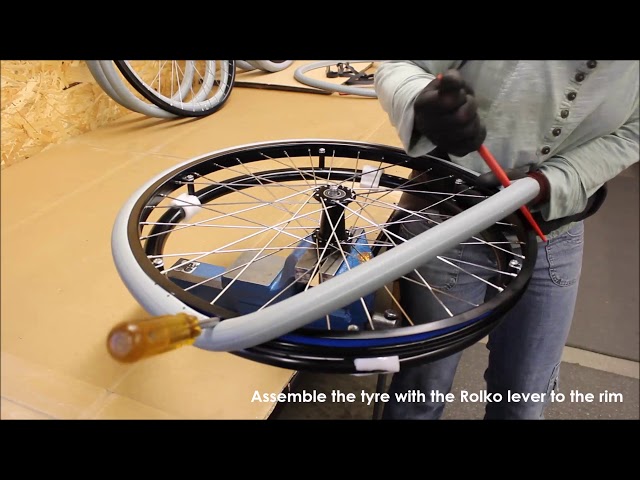
Pneumatic tires are the easiest to remove—but only if fully deflated first.
Deflate the Inner Tube Completely
Locate the valve stem. For Schrader valves, press the center pin with a pen or screwdriver. For Presta valves, unscrew the tip first, then press down. Let all air escape until the tire pulls slightly away from the rim. Never attempt removal on an inflated tire—this risks injury and can warp the rim.
Unseat the Tire Bead from the Rim
Work opposite the valve stem. Pinch the tire and slide a plastic tire lever under the bead. Hook it onto a spoke to hold it in place. Insert a second lever 4–6 inches away and pry upward. Slide both levers around the rim to remove one side of the tire.
✅ Use three levers: One holds the position while you work with the others—this prevents the bead from snapping back.
Remove and Inspect the Inner Tube
Once one side is off, reach in and pull the inner tube out. Inspect the inside of the tire for glass, thorns, or debris. Check the rim tape—if torn, replace it to prevent future flats.
🔍 Best Practice: Always inspect spokes, bearings, and rim during tire changes to catch hidden damage early.
Remove Solid Rubber Tires: Cutting vs. Prying
Since solid tires can’t be deflated, removal requires more force.
Cut the Tire Down the Center Groove
Use a hook knife or box cutter to slice along the center tread groove—never across. Make multiple shallow passes to avoid cutting into the rim. Once fully cut, peel the two halves apart.
⚠️ Caution: Deep cuts can damage the rim or spokes. Follow the natural groove and work slowly.
Pry With Channel Locks and a Screwdriver
Clamp vice grips onto the tire edge. Insert a long flathead screwdriver under the tire and pry upward toward you. Slide the screwdriver 6–8 inches over and repeat. Continue around the rim until the tire lifts off.
✅ Alternative: Use channel locks if vice grips aren’t available. This method avoids blades but requires more effort.
Angle Grinder: Last Resort Only
If the tire is fused to the rim, an angle grinder with a cut-off wheel can slice through rubber quickly. Only use with safety goggles, gloves, and in a ventilated area. Finish with kitchen shears and clean the rim thoroughly.
❌ User Warning: “An angle grinder seems massively like overkill… you may damage your wheel.” – CrippledJesus97
Remove Tires With Airless Inserts Safely

These tires combine a pneumatic shell with a solid core—don’t discard the inner insert.
Cut the Outer Tire Casing
Use a sharp blade to cut along the center groove, following the insert’s natural seam. Cut all the way through the rubber casing.
Peel Off the Tire Halves
Once cut, peel the two halves away from the rim. The solid insert will remain. Do not cut or damage it.
Remove and Save the Insert
Gently loosen the 1-inch overlapping seam and pull the insert straight out. Clean the rim and spray with silicone lubricant before reinstalling.
✅ Pro Tip: Lubricating the rim makes future removal significantly easier.
Install New Tires the Right Way
Mount Pneumatic Tires Without Pinching the Tube
- Replace damaged rim tape.
- Pre-inflate the tube with 3–5 pumps—just enough to hold shape.
- Align the valve with the rim hole.
- Seat one bead by hand.
- Use baby powder or soapy water on the second bead.
- Use tire levers only for the final section—avoid pinching the tube.
🔍 Final Check: Rotate the tire and squeeze to ensure the tube isn’t trapped under the bead.
Fit Solid Tires Using Hot Water
- Soak the new solid tire in hot (not boiling) water for 2–3 minutes.
- Remove and install immediately—heat makes rubber pliable.
- Work quickly before it cools and stiffens.
✅ Why It Works: Heat reduces installation force by up to 50%, allowing hand-mounting.
Reinstall Airless Insert Tires
- Snap the insert back into the rim, aligning the seam.
- Start the new tire on one side by hand.
- Use a flat screwdriver to guide the first edge.
- Work around with bicycle tire levers.
- For tight spots, kneel on the wheel to apply even pressure.
- Switch to a thin putty knife if levers fail.
🔍 Final Check: Inspect the backside—uneven seating causes premature wear.
Inflate and Test for Safety
Set the Correct PSI
Check the sidewall for recommended pressure:
– Standard pneumatic: 60–80 PSI
– High-performance: 85–145 PSI
Inflate to the midpoint (e.g., 100 PSI for 85–145) for best balance of comfort and efficiency.
⚠️ Never exceed max PSI—overinflation can blow the bead off with a gunshot-like pop.
Verify Bead Seating and Reinstall the Wheel
After inflation, run your hand around the tire to ensure the bead is fully seated. Listen for hissing—this indicates a leak or pinched tube.
Reinstall the wheel:
1. Align with the axle.
2. Push straight in until it clicks.
3. Engage brakes and test roll forward and backward.
4. Ensure smooth, quiet rolling with no wobble.
🔧 Pro Move: Carry a portable pump, spare tube, and tire levers in your mobility kit for roadside repairs.
When to Seek Professional Help
Some situations require expert tools or knowledge:
– Bent or damaged rim
– Tire fused to rim
– Uncertain about valve type or sizing
– Converting from solid to pneumatic tires
✅ Note: Many bike shops have professional tire changers and can do the job in minutes.
💬 User Insight: “Without knowing details I’d be concerned that the rims are made for solid tires and cannot accept pneumatic tires.” – Ok-Cantaloupe7160
Maintain Tire Longevity and Prevent Flats
Weekly Inspections
- Check for cracks, bulges, or tread wear
- Test air pressure with a digital gauge
- Remove embedded debris
- Clean tires to prevent floor damage
Build a Repair Kit
Keep in a small bag:
– 2 plastic tire levers
– Spare inner tube
– Mini pump or CO2 inflator
– Patch kit
– Utility knife
✅ Pro Tip: Practice tire changes at home so you’re ready for emergencies.
Safety First: Protect Yourself
- Wear gloves and safety glasses when cutting.
- Work on a stable surface—never the floor.
- Never rush—excessive force can damage the rim or injure your hands.
- Inflate away from your face—a loose bead can pop off violently.
Summary: Key Actions by Tire Type
| Task | Method | Tools Used |
|---|---|---|
| Remove Pneumatic | Deflate, pry bead | Tire levers, screwdriver |
| Remove Solid | Cut center or pry | Hook knife, channel locks |
| Remove Insert Tire | Cut outer, save core | Blade, hands |
| Install Solid | Hot water soak | Bucket, hot water |
| Inflate Correctly | Mid-range PSI | Digital pump |
| Seek Help | Rim damage, conversion | Bike shop, DME provider |
🔄 Maintenance Cycle: Inspect → Remove → Replace → Reinstall → Inflate → Verify
Knowing how to remove wheelchair tire empowers you to maintain independence, save money, and avoid downtime. With the right tools, clear steps, and safety awareness, you can handle most tire changes confidently—whether at home or on the go.