
If your dog can no longer walk due to injury, illness, or paralysis, a dog wheelchair made from PVC pipe offers an affordable, DIY solution to restore mobility. While not ideal for long-term or heavy-duty use, a well-built PVC cart can give small dogs (under 20 lbs) a second chance to move freely during recovery from conditions like Fibrocartilaginous Embolism (FCE), IVDD, or Coonhound Paralysis.
This guide walks you through every step of building a safe, functional dog wheelchair using only PVC pipe and hardware-store parts. You’ll learn how to measure your dog accurately, assemble a stable frame, mount wheels correctly, and secure your dog comfortably—all for under $40. We’ll also highlight critical design flaws to avoid, such as poor weight distribution and unsafe wheel placement, so your dog stays supported without strain.
Whether you’re creating a temporary aid while fundraising for a professional cart or testing your dog’s ability to adapt to mobility support, this guide gives you everything needed to build a working PVC wheelchair—quickly, safely, and affordably.
Measure Your Dog Accurately
Before cutting any pipe, precise measurements are essential for comfort, balance, and functionality.
Shoulder to Hip Length
Measure from the base of the front leg (just behind the shoulder) to the top of the rear leg (hip joint). This determines the side support length of the frame. Have your dog stand on a non-slip surface and use a flexible measuring tape to get an accurate reading.
Hip Width
Use a soft tape to measure across the widest part of the hips. This sets the rear crossbar size and ensures the hind legs have enough clearance to move naturally.
Shoulder Width
Measure across the front legs at their widest point. This defines the front crossbar, which supports the chest and connects the side rails.
Ground to Back Height
Measure vertically from the floor to the top of the back behind the front legs. This helps position the support bars and ensures proper rear-end lift when the wheels are attached.
Pro Tip: Use masking tape to mark where your dog’s legs touch the ground. Recheck all measurements twice—accuracy prevents instability and discomfort.
Avoid guessing—ill-fitting frames cause instability, chafing, or spinal stress. Write down each number clearly before moving to the next step.
Cut and Prepare PVC Pipes

Use 3/4″ or 1″ PVC pipe for better rigidity, especially for dogs near the 20-lb limit. Schedule 40 PVC is commonly used and widely available at hardware stores.
Required Cuts (Standard Small Dog Frame)
- Two side supports: Equal to shoulder-to-hip length (e.g., 14″)
- Front crossbar: Shoulder width (e.g., 8″)
- Rear crossbar: Hip width (e.g., 9″)
- Two rear verticals: 6–8″ (to raise wheels under hips)
- Two diagonal supports: 5–7″ (angled for leg clearance)
Use a PVC cutter or hacksaw for clean, square cuts. Deburr edges with sandpaper to prevent fabric wear and skin irritation.
Warning: Never drill holes in PVC elbows or tees—this weakens structural joints. Drill only through straight pipe sections.
Label each piece with tape to avoid confusion during assembly.
Assemble the Frame Structure
A stable, square frame ensures even weight distribution and smooth movement.
Connect Side and Crossbars
- Join the side supports and crossbars using 90° PVC elbows.
- Form a rectangle: front crossbar + two side pieces + rear crossbar.
- Dry-fit first to confirm alignment and make sure the rectangle is level.
Add Rear Support Bars
- Attach 6″ vertical pipes to the back ends of the side supports using wye fittings or 45° elbows.
- These extend downward and slightly outward to allow hind leg clearance.
- Wye fittings let you branch off for wheel axles—ideal for stability.
Key Design Rule: Wheels must sit under the dog’s hips, not behind them. If wheels are too far back, they act as a pivot, forcing your dog to drag its back end.
Use PVC cement on all joints for permanent, wobble-free connections. Hold each joint for 30 seconds after assembly to ensure a strong bond.
Mount Wheels Securely

Wheels carry the dog’s weight—improper mounting leads to failure or injury.
Choose the Right Wheels
- Diameter: 6″ to 10″ for smooth rolling
- Type: Swivel caster wheels or fixed axle wheels with sealed bearings
- Avoid toy-grade wheels—they seize up quickly
Hardware store utility wheels (e.g., hand truck or garden cart wheels) work well. Pneumatic tires absorb shock and roll easily over grass or gravel.
Install Axles
- Drill a ½” hole through the bottom of each rear vertical pipe.
- Insert a ½” bolt or threaded rod as the axle.
- Slide the wheel onto the bolt, centered under the hip.
- Secure with nuts on both sides; leave slight wiggle room so wheels spin freely.
Test Spin: Lift the frame and rotate each wheel. If it binds, loosen the nuts slightly.
For added strength, wrap axle joints with electrical tape or fiberglass resin.
Build the Harness System

Your dog must be securely but comfortably attached—no slipping, pinching, or breathing restriction.
Abdominal Support Sling
- Cut a nylon or mesh fabric strip (3″ wide x length of belly)
- Place under the dog’s abdomen, just in front of the rear legs
- Attach to the rear crossbar using adjustable Velcro straps
- Ensure it lifts the back end slightly off the ground
Shoulder Harness
- Use a U-shaped fabric piece that goes over both shoulders
- Connect to the front crossbar with two Velcro straps
- Keep it snug but allow full front-leg movement
Add Padding
- Slide pool noodles over PVC where it contacts the chest or flanks
- Wrap foam tubing around shoulder straps
- Prevents chafing and pressure sores
Fit Check: Your dog should walk naturally, breathe easily, and be able to squat to pee or poop without obstruction.
Test and Adjust the Wheelchair
Never skip the trial run—safety and comfort depend on real-world testing.
First-Time Fit
- Place the cart under your dog on a non-slip surface
- Fasten both harness straps
- Lift the back end slightly to engage the wheels
- Let your dog take a few steps
Watch for:
– Dragging rear legs (indicates insufficient lift)
– Leaning to one side (uneven wheel height)
– Reluctance to move (discomfort or imbalance)
Make Immediate Adjustments
- Too low? Add spacers under wheels or lengthen vertical supports.
- Too tight? Loosen straps and reposition padding.
- Wobbly frame? Reinforce joints with extra glue or cable ties.
Pro Tip: Start with 5-minute sessions, 2–3 times a day. Gradually increase as your dog gains confidence.
Monitor skin daily for redness or sores—early detection prevents serious injury.
Upgrade for Durability and Comfort
Basic PVC works, but smart upgrades improve performance and safety.
Reinforce High-Stress Joints
- Wrap fiberglass tape around wye fittings and axle connections
- Soak in resin and let cure for rock-solid strength
- Prevents cracking under repeated stress
Upgrade to Larger Wheels
- Replace 3″ wheels with 8″ pneumatic tires
- Rolls smoothly over grass, gravel, and cracks
- Reduces effort for your dog
Add Suspension
- Insert rubber grommets between frame and axle mounts
- Or use bungee cords to suspend the rear crossbar
- Cushions bumps and reduces spinal jolt
Make It Modular
- Skip PVC glue; use slip fittings only
- Lets you disassemble for storage or travel
- Easy to adjust as your dog improves
Expert Note: One builder inserted aluminum rods inside PVC side supports for added stiffness—simple and effective.
Avoid Common Design Mistakes
Even small errors can make a cart unusable—or worse, harmful.
Wheels Too Far Back
Placing wheels at the very rear of the frame turns them into a pivot point, not a support. The dog’s hips sag, increasing spinal strain.
✅ Fix: Position wheels under the hip joint, not behind it.
No Leg Clearance
If the rear frame is straight, legs hit the crossbar when walking.
✅ Fix: Use wye fittings or angled elbows to flare the back legs outward.
Unsupported Hindquarters
A weak or narrow sling forces the front legs to carry too much weight.
✅ Fix: Use a wide abdominal sling that supports from hip to mid-belly.
Hard Contact Points
Bare PVC rubbing on skin causes sores in minutes.
✅ Fix: Cover every contact zone with pool noodles or foam padding.
Warning: Never leave your dog unattended in the cart. Supervise all use.
Compare DIY vs. Commercial Wheelchairs
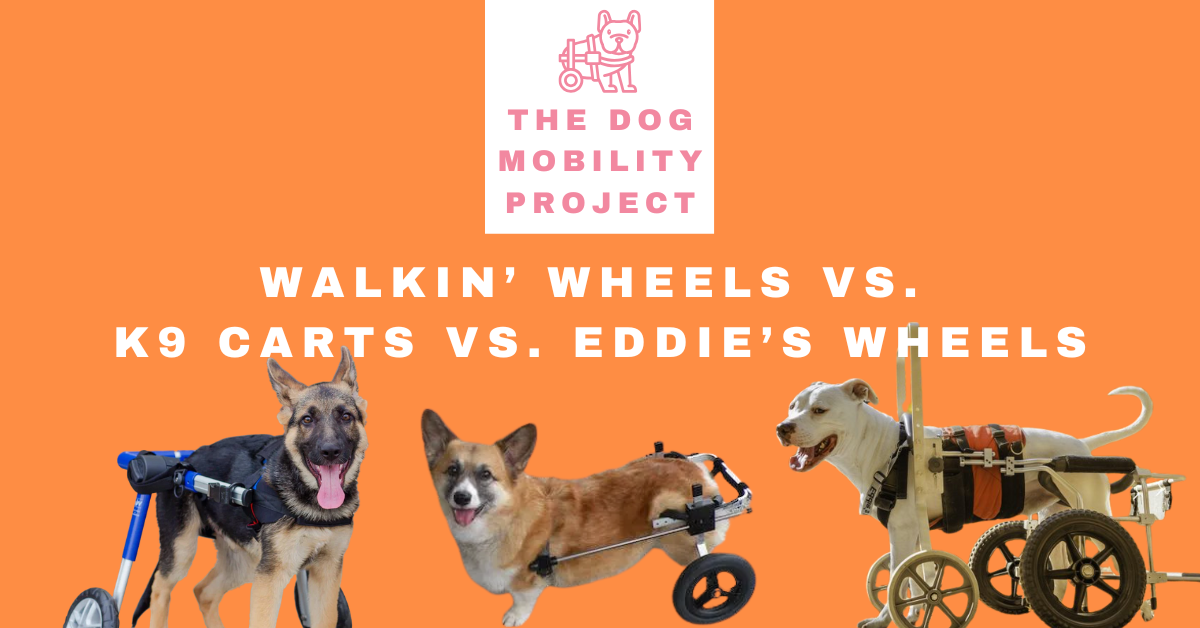
Know when a PVC cart is enough—and when to upgrade.
DIY PVC Cart
- Cost: $30–$40
- Best for: Small dogs, short-term use, trial period
- Pros: Cheap, fast to build, customizable
- Cons: Fragile, not adjustable, not for large dogs
Used Professional Cart (e.g., K-9 Cart)
- Cost: $150–$175
- Best for: Medium dogs, long-term use
- Pros: Durable, fully adjustable, vet-approved
- Cons: Limited availability
New Professional Cart (e.g., Eddie’s Wheels)
- Cost: $300–$350
- Best for: Permanent mobility support
- Pros: Custom fit, aluminum frame, lifetime support
- Cons: Expensive
Smart Move: Use the PVC cart while saving for a professional model. Many dogs adapt quickly—proof they’ll benefit from a better cart.
Contact K-9 Cart Company East (866-K9-CARTS) for used cart referrals.
Support Recovery with Physical Therapy
A wheelchair helps mobility—but rehabilitation builds recovery.
Daily Passive Exercises
- Gently bend and extend rear legs (range-of-motion)
- Do 10 reps, 2–3 times daily
- Prevents joint stiffness and muscle atrophy
Swimming or Water Treadmill
- Low-impact exercise that rebuilds strength
- Even paralyzed dogs can “walk” in water
- Ask your vet about local rehab clinics
Home Walking Routine
- Use the cart for short, supervised walks
- Encourage forward motion with treats and praise
- Builds confidence and core strength
Success Story: One Labrador regained 90% mobility after 4 months of daily therapy—starting with a DIY cart.
Even if full recovery isn’t possible, physical activity improves bladder control, circulation, and mood.
Know the Risks and Limitations
PVC is not a structural material—it’s plumbing pipe. Respect its limits.
Why PVC Fails Under Load
- Low tensile strength: Cracks under stress, especially at drilled holes
- UV degradation: Weakens in sunlight over time
- Cold brittleness: Becomes fragile in winter
One expert warned: “You might be doing your dog more harm than good.” Poor design increases spinal strain and joint damage.
When to Stop Using PVC
- Dog weighs over 20 lbs
- Dog is very active or strong
- Frame shows cracks, warping, or wobbling
- Dog shows pain, sores, or resistance
✅ Transition plan: Start with PVC, but move to aluminum for long-term use.
Always consult your veterinarian or neurologist before relying on any mobility aid.
Final Tips for Success
Build smart, monitor closely, and prioritize your dog’s well-being.
Quick Safety Checklist
- ✅ Wheels under hips, not behind
- ✅ Straps snug but not tight
- ✅ No exposed sharp edges
- ✅ Dog can eliminate freely
- ✅ Daily skin and joint checks
Maintenance Routine
- Clean harness after each use
- Inspect wheels and bolts weekly
- Replace cracked or worn parts immediately
Emotional Support Matters
- Dogs adapt fast when owners are patient
- Celebrate small wins: first step, first walk, first wag
- Join online communities (Reddit, Facebook) for help and encouragement
One user said: “You’re a good human. Glad Max is on the move again!”
That’s what this is really about—giving your dog dignity, movement, and joy, even in hard times.