
Washing someone’s hair while they remain seated in a wheelchair isn’t just about hygiene—it’s an essential act of care that preserves health, dignity, and comfort. For individuals with paralysis, severe joint instability, spinal fusion, or progressive neuromuscular conditions, traditional showering or sink-based washing may be impossible. Yet clean hair and a healthy scalp are vital, especially when managing psoriasis, seborrheic dermatitis, or medication residue buildup. The challenge lies in delivering a thorough shampoo without transfers, standing, or reclining beyond safe limits—all while protecting both the person being washed and the caregiver from strain or injury.
This guide provides a practical, equipment-backed method for shampooing someone directly in their wheelchair. Whether you’re a family caregiver, home health aide, or someone adapting to new physical realities, you’ll learn how to set up a safe washing station, use adaptive tools, and follow a step-by-step process that works even for those with cranio-cervical fusion, fragrance sensitivities, or power wheelchairs vulnerable to water damage. From kitchen sink hacks to inflatable basins and telehealth support, every solution is designed for real-world use—tested by people living with Ehlers-Danlos, osteoporosis, and complex mobility needs.
Lock the Wheelchair and Protect the Floor
Before introducing water, ensure the environment is secure. Engage both brakes on the wheelchair firmly and test for stability by gently pushing the frame. Even slight movement during washing can cause imbalance or injury. Place a large waterproof mat—such as a plastic-backed incontinence pad or vinyl shower curtain—under and behind the chair, extending at least two feet behind to catch runoff. Add absorbent towels beneath the mat if near carpet or electronics to prevent slips and water damage.
Choose a Warm, Private Location with Water Access
The kitchen is often the best spot because sinks are lower and more accessible than bathroom basins, and countertops provide space for supplies. Ensure the room is warm—especially important for individuals with poor circulation or temperature dysregulation. Close doors for privacy and use bright, task-oriented lighting so you can clearly see the scalp and monitor water flow. Avoid drafty areas and schedule washing during times when the person is most alert and least fatigued.
Gather Supplies Before Starting
Have everything ready to minimize interruptions. Essential tools include:
– Fragrance-free, medicated shampoo (e.g., ketoconazole, coal tar, or salicylic acid for psoriasis)
– Conditioner (use only on ends if scalp is sensitive)
– Handheld sprayer with 6–8 ft hose (attachable to kitchen or bathroom faucet)
– Adjustable spray nozzle with mist setting to reduce force
– Microfiber towels (2–3 for blotting and wrapping)
– Soft face cloth or plastic eye shield to protect face and ears
– Neck support (rolled towel, inflatable neck pillow, or cervical roll)
– Drainage system: portable basin, inflatable shampoo bowl, or kiddie pool
– Cool-air blow dryer
– Plastic cape or waterproof drape (optional)
Avoid no-rinse foams if treating scalp conditions—they often leave residue and don’t penetrate plaques effectively.
Use Partial Recline If the Wheelchair Allows
If the wheelchair reclines even slightly (30–45°), use it. This angle allows the head to tilt back just enough for water to run off the scalp without straining the neck. Support the cervical spine with a rolled towel or inflatable neck cushion to prevent overextension. Never force the head backward, especially if cranio-cervical fusion, arthritis, or spinal instability limits movement.
Try Forward-Leaning Only If Tolerated
For users who cannot recline, leaning forward over a counter or sink may work—but only if safe and comfortable. Pad the edge with towels and support the chest and arms. This position increases pressure on hips and shoulders, so limit time and watch for pain or dislocation risk. Not recommended for those with hip instability, severe EDS, or fragile bones.
Install a Long-Reach Handheld Sprayer

Attach a handheld showerhead with at least a 6-foot hose to the nearest sink. Choose one with a pause button and anti-scald feature for safety. Test water temperature first—ideal range is 98–105°F (37–41°C). Hold the sprayer behind the head and direct water downward to avoid splashing the face or ears. If plumbing is inaccessible, use a portable sink like the Drive Medical Deluxe Portable Sink, which offers height adjustability and dual tanks.
Set Up a Drainage System Behind the Chair
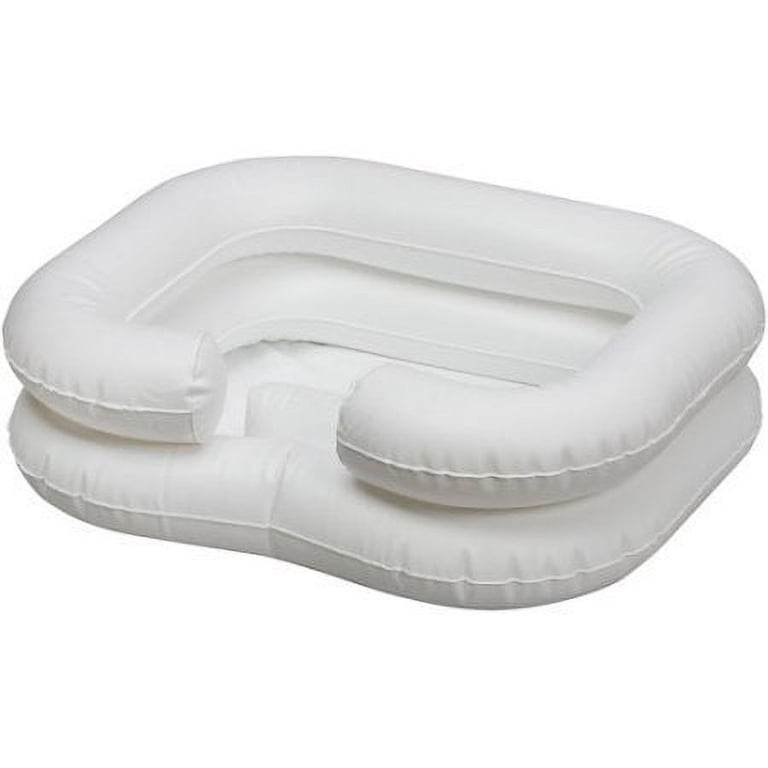
Place a plastic kiddie pool, inflatable shampoo basin, or floor drainage tray behind the wheelchair to catch runoff. Some inflatable basins come with drain tubes that channel water into a bucket—ideal for minimizing spills. Position the collection system before starting so you don’t have to move the person mid-wash.
Pre-Wet the Scalp Gently
Shield the forehead, eyes, and ears with a soft cloth or plastic face guard. Use a mist setting on the sprayer to slowly wet the hair from the back forward. Avoid pouring water directly onto the scalp—this can cause shock or discomfort. Work in sections if hair is thick or long.
Apply Shampoo with Fingertips Only
Use 1–2 teaspoons of shampoo. Massage gently into the scalp using fingertips—no nails. Focus on areas with visible buildup, plaques, or oiliness. For medicated shampoos, let sit for 5–10 minutes before rinsing to maximize effectiveness. Section long hair to ensure even coverage.
Rinse Until Water Runs Clear
Slowly rinse with a steady stream, tilting the head slightly side-to-side if possible to drain all suds. Use a drainage tray, inflatable shampoo bowl, or floor basin to catch runoff. Repeat rinsing until no lather remains—residue can worsen scalp conditions.
Condition Ends Only (If Needed)
Apply conditioner from mid-length to tips. Avoid the scalp if dealing with eczema or seborrhea. Leave for 1–2 minutes, then rinse completely. Over-conditioning can weigh down hair and increase greasiness.
Blot Hair with Microfiber Towel
Wrap hair in a microfiber towel and gently press to absorb water. Do not rub—this can cause tangles and scalp irritation. For very long or thick hair, repeat with a second towel.
Dry with Cool-Air Blow Dryer
Set the dryer to cool or low heat and hold it at least 6 inches from the scalp. Move continuously to avoid overheating. For those with cervical instability, keep the neck neutral—do not bend forward or sideways for extended periods.
Wipe Down the Wheelchair Immediately
Remove all towels and mats. Wipe down the seat, backrest, armrests, and footplates with a dry cloth. Check for moisture near motors, batteries, or electronic controls in power wheelchairs. Even small leaks can corrode components.
Empty and Sanitize Drainage Tools
Pour out wastewater and clean the basin or bowl with mild soap. Let it air dry before storing. Regular cleaning prevents mold, odor, and bacterial growth.
Use an Inflatable Shampoo Basin for Seated Washing
This U-shaped inflatable ring fits around the neck and creates a water-tight basin behind the head. It connects to a drain hose that directs water into a bucket. Can be used while seated or reclined. Pro Tip: Place a towel-lined tray under the basin to catch drips and protect upholstery.
Consider a Rolling Shower Chair If Transfer Is Possible
For users who can transfer, the Drive Medical Roll-In Shower Chair with Headrest allows full-body washing. Features include a cutout seat for toileting, padded backrest, and flip-up arms.
Use No-Rinse Cleansers Only Between Washes
Foams like Prestige Medical Fresh Start No-Rinse Shampoo are helpful between full washes but are not substitutes for medicated shampooing. Many contain alcohol or fragrances that irritate sensitive skin.
Try the Kitchen Sink Setup with Drainage Pool

Position the wheelchair facing the sink. Remove the headrest temporarily if safe. Install an 8-foot sprayer. Place a plastic kiddie pool behind the chair. Lean head back slightly with neck support. Caregiver sprays from behind, directing water into the pool. Warning: Never allow water near wheels or electronics.
Schedule a Telehealth Occupational Therapy Consultation
Occupational therapists offer virtual visits to assess your setup. Send photos or videos of:
– The wheelchair and room layout
– Current washing attempts
– Available supplies
An OT can recommend custom positioning, equipment modifications, and safe techniques. Many insurance plans cover telehealth OT.
Wash Weekly for Psoriasis and Dermatitis
Use medicated shampoos at least once a week. Massage in for 3–5 minutes. Let sit 5–10 minutes before rinsing. Use a soft-bristle brush to gently loosen scales before washing.
Protect Yourself as a Caregiver
Adjust height to reduce bending—use a stable step platform if needed. Use two people when necessary: one stabilizes the head, the other manages water. Communicate throughout: “Too hot? Any pain?” Stop immediately if discomfort occurs.
Plan Ahead for Progressive Conditions
If mobility is declining, explore Hoyer lifts, ceiling track systems, or home modifications like roll-in showers. Document current routines so future caregivers can follow them.
Final Tips and Warnings
Never force uncomfortable positions. Protect power wheelchair electronics from water. Prioritize scalp health—an untreated condition can lead to infection. Start small: begin with a sprayer and kiddie pool, then add tools over time. Ask for help, try telehealth, and adapt as needs change.
Shampooing someone in a wheelchair is challenging but entirely manageable with the right tools and techniques. By focusing on safety, dignity, and medical needs, you can provide effective care—even in the most complex situations.