
For individuals using wheelchairs, walkers, or scooters, a simple set of stairs can become an insurmountable barrier. A wheelchair ramp isn’t just a convenience—it’s a lifeline to independence, safety, and dignity. Yet with installation costs often ranging from $1,000 to $3,000 or more, many low-income families, seniors, veterans, and people with disabilities are left stranded at home. The good news? You can get a wheelchair ramp for free, thanks to government programs, nonprofit organizations, and community volunteer networks across the U.S.
This guide reveals every legitimate pathway to a free ramp—no hidden fees, no repayment, and no waiting in the dark. From VA benefits for veterans to volunteer builds by local clubs, we’ll walk you through exactly how to apply, what documents you need, and where to start—so you can regain safe access to your home without spending a dime.
Apply for VA Benefits to Get a Free Ramp (Veterans Only)

If you’re a U.S. military veteran, the Department of Veterans Affairs (VA) offers one of the most reliable ways to get a wheelchair ramp at no cost through the Home Improvements and Structural Alterations (HISA) Program.
Who Qualifies and How to Apply
You’re eligible if you’re a veteran with a service-connected or non-service-connected disability that requires a ramp for medical reasons. The HISA program covers up to $6,800 per year for design, materials, and labor—enough to fully fund most residential ramps.
Steps to apply:
1. Contact your local VA medical center or a Veterans Service Officer (VSO).
2. Submit VA Form 10-0137 (Application for Automobile and Adaptive Equipment).
3. Include a doctor’s letter confirming the medical necessity of the ramp.
✅ Pro Tip: Combine HISA with other VA benefits like the Specially Adapted Housing (SAH) grant for even greater coverage, especially for permanent, code-compliant ramps.
Veterans should always start here—this is one of the most direct and well-funded paths to a free, professionally installed ramp.
Access HUD-Funded Local Programs for Home Accessibility
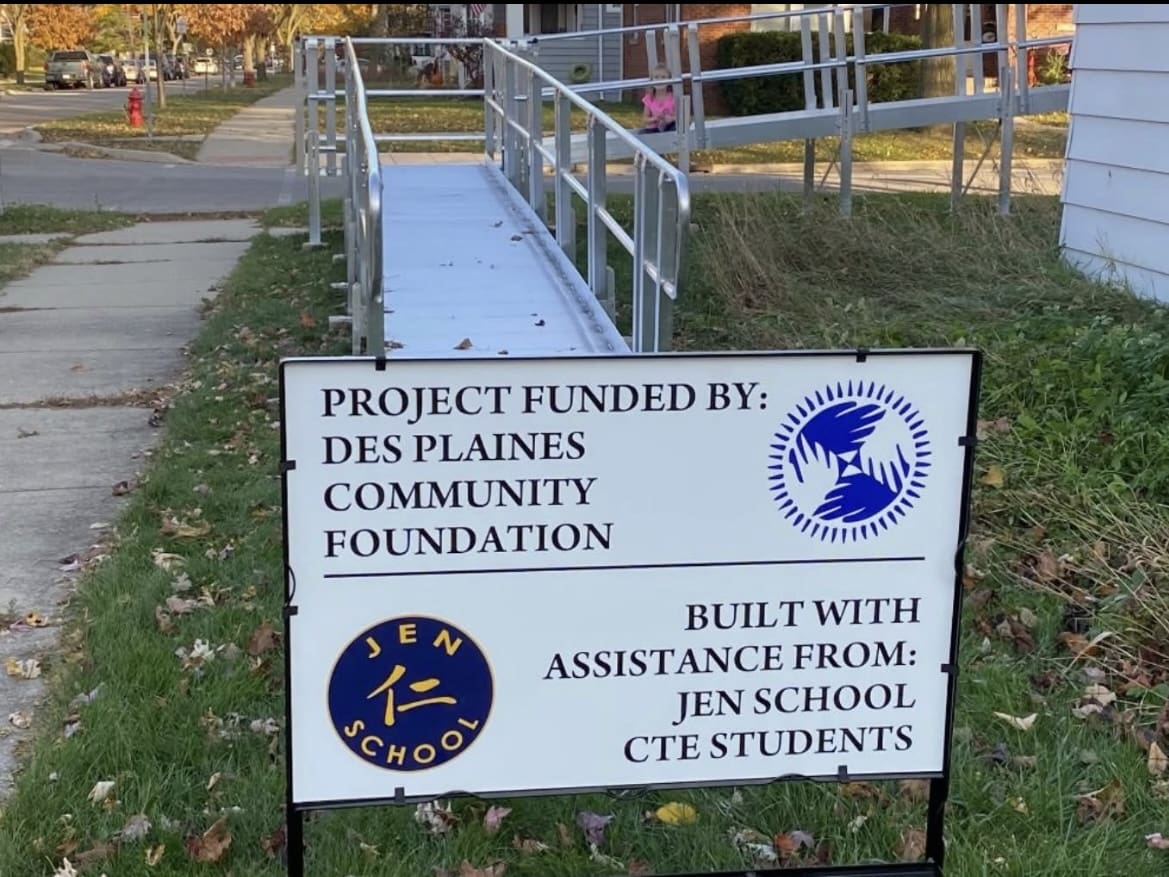
While the U.S. Department of Housing and Urban Development (HUD) doesn’t install ramps directly, it funds local programs that do—especially through the Community Development Block Grant (CDBG) and HOME Investment Partnerships Program.
How to Get Help Through HUD Funding
These programs target low- to moderate-income homeowners and renters (with landlord approval) who need accessibility modifications.
Eligibility:
– Income below 80% of your area’s median income.
– Proof of disability or age (60+).
– Homeownership or rental with permission.
Action steps:
– Contact your state housing finance agency or local housing authority.
– Ask specifically: “Do you offer CDBG-funded wheelchair ramp installations?”
– Submit documentation: income verification, disability proof, and residency.
📌 Example: In rural counties, CDBG funds are routinely used to build free ramps for elderly homeowners—yet many never apply because they don’t know the program exists.
Tap Into Area Agencies on Aging for Seniors 60+
If you’re 60 or older, your Area Agency on Aging (AAA) can connect you to free ramp programs funded by the Older Americans Act.
What Services Are Available?
AAAs often partner with nonprofits like Rebuilding Together or Habitat for Humanity to provide:
– Fully funded ramp installations.
– Fall-prevention modifications.
– Priority access for urgent cases.
How to apply:
– Call the Eldercare Locator at 1-800-677-1116.
– Visit eldercare.acl.gov to find your local AAA.
– Request a home assessment and ramp referral.
⏱ Many seniors receive their ramp within 3–6 months—some even faster in emergency situations.
Contact Your Local Center for Independent Living
Centers for Independent Living (CILs) are nonprofit, disability-run organizations that help people with disabilities live independently—and they’re a powerful resource for accessing free ramps.
How CILs Can Help
CILs provide:
– Referrals to local ramp programs.
– Application assistance and advocacy.
– Help navigating complex eligibility systems.
Find your nearest CIL:
– Visit the National Council on Independent Living (NCIL) directory: ncil.org/cil-directory.
– Call NCIL at 202-207-0334 or email ncil@ncil.org.
✅ CILs are especially valuable if you’ve been denied elsewhere—they know how to appeal, reapply, and connect you with alternative solutions.
Apply to National Nonprofits That Build Free Ramps
Dozens of national organizations offer free labor, materials, or funding for wheelchair ramps—no repayment required.
Rebuilding Together – Full Ramp Installation at No Cost
One of the largest providers of free home modifications in the U.S., Rebuilding Together serves low-income homeowners with disabilities, seniors, and veterans.
Eligibility:
– Income ≤80% of Area Median Income.
– Must own your home (renters considered case-by-case).
– Demonstrated need due to age or disability.
How to apply:
– Go to rebuildingtogether.org.
– Use the “Find Your Local Affiliate” tool.
– Submit your request directly to your local chapter.
⚠ Demand exceeds supply—apply early and follow up within two weeks to stay on the radar.
Habitat for Humanity – Free or Low-Cost Repairs
While best known for building homes, many local Habitat chapters now offer free accessibility repairs, including ramps.
Eligibility:
– Low income.
– Homeownership.
– Some require “sweat equity” (helping with the build).
How to apply:
– Visit habitat.org/find-a-habitat.
– Search by ZIP code.
– Ask specifically about home repair or ramp programs.
💡 Even if your chapter doesn’t offer free ramps, they may sell materials at a steep discount through Habitat ReStore.
Wounded Warrior Project – Grants for Injured Veterans
Post-9/11 veterans with service-connected injuries can receive grants for home modifications.
Eligibility:
– Service-connected injury.
– Financial and medical need.
Apply at:
– Website: woundedwarriorproject.org
– Phone: 904-296-7350
– Email: grants@woundedwarriorproject.org
✅ Many recipients receive full ramp funding within 90 days.
Christopher & Dana Reeve Foundation – Paralysis Grants
This foundation offers Quality of Life Grants ($500–$1,000) that can be used toward ramp costs.
Eligibility:
– U.S. resident with spinal cord injury or paralysis.
– Financial need.
Apply biannually at christopherreeve.org/grants.
💬 Real impact: One grantee combined this with volunteer labor to build a full ramp for $0 out-of-pocket.
United Way – Dial 211 for Local Referrals
Dial 211 or visit 211.org to connect with local ramp programs, funding sources, and volunteer groups.
🚨 United Way of Southwest Michigan coordinated a full volunteer ramp build for a paralyzed man in Romulus—proving that 211 can unlock hidden local resources.
Reach Out to Community Service Clubs
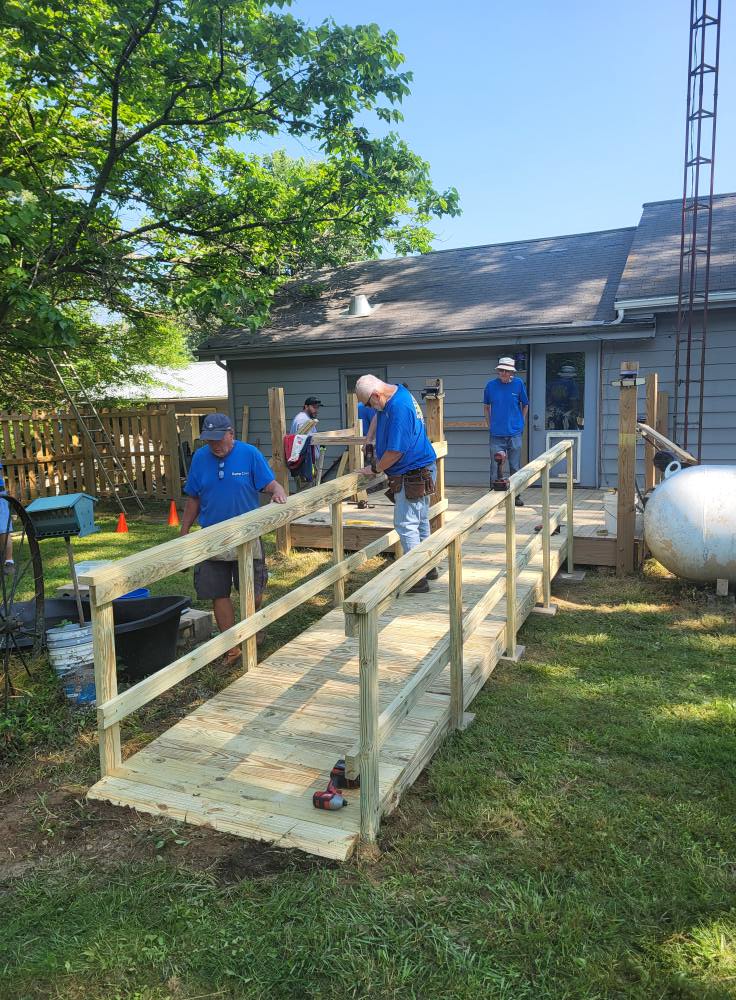
Local service clubs often fund and build ramps as part of their community outreach.
Lions Club – Locally Funded Builds
Funded by member donations, many Lions Clubs complete 1–2 ramps per year.
How to apply:
– Visit lionsclubs.org/club-finder.
– Contact your nearest club with photos and medical documentation.
Kiwanis Club – Annual Service Projects
Many Kiwanis chapters include ramp builds in their yearly service calendar.
How to apply:
– Use Kiwanis Club Finder.
– Ask: “Do you offer free wheelchair ramp builds?”
PUSH America – Fraternity-Led Volunteer Builds
Run by Pi Kappa Phi, PUSH America builds ramps in underserved communities.
Apply at:
– Website: pushamerica.org
– Phone: 704-504-2400
– Email: info@pushamerica.org
🛠 Most builds happen spring–summer—apply by February for best timing.
Follow the Step-by-Step Application Process
Getting a free ramp takes effort, but the process is straightforward.
1. Confirm Eligibility
You’ll likely qualify if you:
– Use a wheelchair, walker, or scooter.
– Are 60+ or a veteran.
– Have low to moderate income.
– Own your home (or rent with permission).
2. Gather Documents
Prepare:
– Doctor’s letter stating medical need.
– Proof of income (SSI/SSDI letter, tax return).
– Proof of residency (deed or lease).
– Photos of entryway and stairs.
– Cost estimate (optional, but helpful).
3. Apply to 2–3 Programs
Don’t rely on one. Apply to Rebuilding Together, your AAA, and 211 simultaneously.
4. Follow Up
Call within 2–3 weeks. Keep a log: date applied, who you spoke with, next steps.
5. Schedule the Build
Installation typically takes 1–3 days. Timeline: 1–6 months, depending on volunteer availability.
Explore Backup Options If You Don’t Qualify
If denied, don’t give up. Try these cost-saving alternatives:
- Modular ramp kits: $200–$800 (Home Depot, Lowe’s, Amazon).
- Crowdfunding: Raise $1,000–$3,000 via GoFundMe or Facebook.
- Low-interest loans: From credit unions or CDFIs (0–3% interest).
- Volunteer labor only: Some groups work for free if you buy materials.
- Reclaimed materials: Use Habitat ReStore or contractor scraps to cut costs by 30–50%.
Ensure Your Ramp Meets Safety Standards
Even free ramps must be safe. Reputable builders follow ADA guidelines:
– Slope: 1:12 (1 inch rise per 12 inches run).
– Width: At least 36 inches.
– Handrails: Required if rise > 6 inches.
– Landings: 60” x 60” at top and bottom.
– Non-slip surface: Essential for outdoor ramps.
Most programs handle permits and inspections—ask to confirm.
Final Tips for Success
- Start now: The process can take months.
- Apply to multiple programs: Increase your odds.
- Document everything: Keep copies of all forms.
- Ask for help: Churches, neighbors, and local media can advocate for you.
- Follow up: Persistence pays off.
Thousands of free wheelchair ramps are built every year across the U.S. You’re not alone—and you don’t have to pay. With the right resources and determination, a free ramp is within reach. Start with the VA, United Way 211, or Rebuilding Together—and take the first step toward independence today.