
If you use both crutches and a wheelchair, you know the daily struggle: where to store your crutches when rolling. Dangling crutches can slip off, throw off your balance, or become unreachable when you need them most. Finding a reliable way to attach crutches to a wheelchair isn’t just about convenience—it’s about safety, independence, and smooth transitions between walking and rolling. Whether you’re commuting, traveling, or navigating tight spaces, the right crutch storage solution keeps your mobility aids secure and within reach.
The good news? There are multiple proven ways to attach crutches—ranging from commercial holders and clip-on mounts to DIY hacks and folding crutches. Each method has strengths depending on your wheelchair type, crutch model, and lifestyle. This guide breaks down every effective option, backed by real user experiences and expert tips, so you can choose the best way to carry your crutches safely and confidently.
Choose the Right Commercial Crutch Holder

Diestco Crutch Holder (CDCB6313 & CDCB6213)
For most users, the Diestco crutch holder is the gold standard. Made in the USA from durable, water-resistant nylon, it securely holds both forearm (Lofstrand) and underarm (axillary) crutches, as well as canes. Two models ensure compatibility with different chair designs:
- CDCB6313: Designed for wheelchairs with push handles. Simply loop the straps over the handles for quick, tool-free installation.
- CDCB6213: Built for scooters or chairs without push handles. Uses a harness that wraps over the seat back, making it ideal for rigid frames or power chairs.
Both models feature internal Velcro straps to prevent crutches from shifting and fold neatly with the wheelchair for transport. At $41.95, it’s a durable investment that many users call “a game-changer.”
User Tip: William Gordon from Chicago confirms it “holds crutches securely” and folds easily. However, Jennifer (5’4″) notes that on some chairs, longer crutches may extend too far, making the Velcro straps difficult to fasten.
Can It Hold a Walker?
No—the Diestco crutch holder is only 5″ wide, too narrow for most walkers. For walker storage, use the Diestco Walker Holder (CDCB6214), which is 24″ wide and designed specifically for scooters and wheelchairs.
Compatibility with Forearm Crutches
Yes—Diestco explicitly supports Lofstrand crutches and SideStix. Its secure fit and Velcro retention make it one of the few commercial options trusted by active users.
Use Clip-On Crutch Mounts

WalkEasy Crutch Clips
These compact, rigid clips attach directly to exposed frame tubing on your wheelchair. One clip holds one crutch, so two are needed for a pair. Their low-profile design keeps them out of the way while providing a firm grip.
Installation Challenge: Katja, a user of the TE Terminator rigid chair, couldn’t install them because upholstery covers the backrest posts.
Fix: Cut a small slit in the fabric to access the frame, then secure with a pipe clamp—recommended by an SCI nurse. This modification allows permanent mounting without damaging chair integrity.
Universal Clip Holders (Amazon)
Some universal models, like the B0CLR3DWS5 on Amazon UK, receive mixed feedback. Nickjon3006 reported crutches “fell off immediately,” highlighting inconsistent quality.
Verdict: Stick to reputable brands like WalkEasy or Diestco. If trying universal clips, buy from retailers with good return policies and test thoroughly before relying on them.
Build a DIY Crutch Holder
PVC or ABS Pipe Mount
A cost-effective, customizable solution using common hardware store materials.
You’ll need:
– 1″ diameter PVC or ABS pipe (cut to crutch length)
– End cap
– Bungee cord or heavy-duty strap
Steps:
1. Cap one end of the pipe.
2. Position vertically on the back of the chair.
3. Secure with a bungee cord looped around push handles or frame.
User Feedback:
– BobT21: “Used ABS pipe with bungee—works great.”
– lizhenry: “PVC pipe holds forearm crutches well.”
Pro Tip: Use a pipe clamp for a more permanent fix if your chair has exposed posts.
Fishing Rod Tube Hack
Repurpose a halved fishing rod tube for a sleek vertical holder.
How to build:
1. Cut a rod tube in half lengthwise.
2. Glue on end caps.
3. Attach to push handles with bootlaces or zip ties.
4. Secure bottom with elastic tied to anti-tip castors.
Bonus: Ron (Ron’s Rants) uses it for a track pump and walking stick via carabiners.
Warning: Crutches add rear weight. Move wheels 2 cm back if balance feels off.
Try Folding Crutches
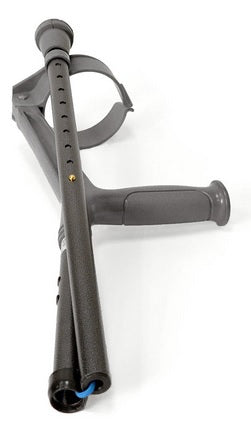
Lightweight Folding Forearm Crutches
Instead of mounting full-length crutches, fold them for compact storage.
Top Brands:
– WalkEasy: 520g per crutch, breaks down into segments
– Fetterman: Heavier (800g), stiffer cuffs—some users report discomfort
– Quickstep (Arbincare): Telescoping design, but Katja returned due to weight and poor nesting
Storage Options:
– Under the seat
– In a backpack
– Strapped to frame with bungee
User Verdict: AlexAgain says, “Fold and put in backpack—it’s light and out of the way.”
Use Built-In Chair Features
Rigid Wheelchair with Loop Handle
Some rigid chairs (e.g., Tilite TR, Jay J3) have a top loop and rigidizer bar—perfect for crutch storage.
How to attach:
1. Collapse crutches to shortest length.
2. Slide tips through the top loop.
3. Rest between rigidizer bar and backrest.
4. Use a clip or Velcro strap to prevent swinging.
Requirements:
– Folding or adjustable crutches
– Clear space behind backrest
– Top handle or loop
Limitation: Large tips (like tornado tips) may not fit.
Factory-Installed Crutch Holders
Some manufacturers offer crutch holders as optional accessories.
- Playonxx34: “They installed one on my new chair—even though I don’t use crutches.”
- Jett: Photo shows holder on a Tilite TR.
Action Step: Ask your provider if a crutch holder can be added to your chair.
Alternative Storage Methods
Crutch Bag or Sling
A soft bag that hangs from the backrest.
Options:
– Diestco crutch bag: Water-resistant with internal Velcro
– Fetterman reinforced bag: Includes rigid plastic to prevent diagonal sliding
User Experience: Katja made her own but found it slipped and hit the wheels.
Best For: Occasional use or backup storage.
Backpack Over Crutches
A clever trick to keep crutches in place.
Method:
1. Place crutches through backrest bars.
2. Rest handles on push handles.
3. Place backpack over the top to hold them down.
Bonus: MillsWheels uses a seatbelt to keep crutches tight.
Magnetic Crutch Holder
Mount a strong magnet on the side of your chair.
Pros:
– Easy on/off
– No straps or tools
Cons:
– May interfere with power chair electronics
– Not suitable for heavy crutches
User: “I use a magnetic holder on my side frame”—Disabled Ramblers UK
Netting or Open Bag
Stretch strong netting or a mesh bag across the backrest bar.
Goal: Keep crutches upright and close to the chair.
Advantage: Allows wheelie capability without crutch interference.
Match Method to Your Wheelchair Type
Manual Wheelchairs with Push Handles
Best Options:
– Diestco CDCB6313 (straps over handles)
– PVC pipe or fishing tube (tied to handles)
– Folding crutches under seat
Why It Works: Push handles provide anchor points for straps, clips, or DIY mounts.
Rigid Manual Chairs (No Push Handles)
Challenges:
– No exposed handles
– Covered frame posts
Solutions:
– Cut upholstery to access backrest posts
– Use Diestco CDCB6213 (harness-style)
– Fold crutches and store under seat or in backpack
Power Wheelchairs
Options:
– Diestco CDCB6213 (harness mount)
– Magnetic holder (away from electronics)
– Custom bracket from mobility supplier
Caution: Never block motors, batteries, or control units.
Scooters and Knee Scooters
Diestco CDCB6213 is designed for scooters—uses a harness over the seat back.
User Confirmed: Works on knee scooters with solid seats.
User-Tested Tips for Success
Search the Right Keywords
Use “wheelchair crutch holder” instead of just “crutch holder” to find compatible products.
Test Before You Commit
Some Amazon holders fail in real use. Order from sites with good return policies.
Modify for Fit
Cut a small slit in upholstery to access frame tubing for clips or clamps—safe if done carefully.
Balance Your Chair
Crutches on the back shift weight rearward. If your chair feels unstable:
– Move rear wheels forward slightly
– Avoid overloading the backrest
Secure Top and Bottom
Prevent swinging by fastening:
– Top: Clip, Velcro, or loop
– Bottom: Bungee, elastic, or strap to anti-tip
Prioritize Accessibility
Make sure you can remove crutches without transferring or help—especially if you use them frequently.
Check NHS or Mobility Services (UK)
Contact your local wheelchair service. They may provide custom modifications or approved accessories.
Summary: Best Methods Compared
| Method | Best For | Pros | Cons |
|---|---|---|---|
| Diestco Holder | Most chairs & scooters | Secure, durable, folds with chair | Velcro may not reach on long crutches |
| WalkEasy Clips | Exposed frame chairs | Compact, low-profile | Hard to install on covered frames |
| PVC Pipe | DIYers | Cheap, customizable | Needs secure mounting |
| Folding Crutches | Frequent transitions | Portable, fits in backpack | Some models heavy or stiff |
| Fishing Tube | Custom users | Removable, vertical | Shifts balance; needs adjustment |
| Crutch Bag | Light use | No tools needed | Can drag or shift |
| Magnetic Holder | Side access | Quick attach | Risk to electronics |
| Backrest Loop Method | Rigid chairs | No extra parts | Chair-specific |
| Backpack Fix | Improvisers | Uses what you have | Less secure |
There’s no universal solution—your best option depends on your wheelchair model, crutch type, height, and daily routine. Many users combine methods (e.g., crutches in backrest loop + backpack over top). Start with a Diestco holder or folding crutches, then customize as needed. With the right setup, attaching crutches to a wheelchair becomes seamless, safe, and second nature.