
Choosing the right wheelchair is about far more than just getting from point A to point B—it’s about reclaiming independence, protecting your health, and living life on your terms. Whether you’re selecting a chair for short-term recovery or long-term mobility, the decision impacts your posture, energy levels, skin integrity, and even your confidence. With so many models, features, and configurations available—from ultralight manual chairs to advanced power wheelchairs—knowing how to choose a wheelchair can feel overwhelming. But by aligning your physical needs, daily routine, and environment with the right features, you can find a chair that moves with you, not against you.
This guide breaks down every critical factor in choosing a wheelchair: your mobility level, chair type, proper fit, frame materials, seating support, wheel design, safety, portability, and funding. You’ll learn how to avoid costly mistakes, what questions to ask during evaluations, and how to work effectively with therapists and insurers. Whether you’re a user, caregiver, or healthcare provider, you’ll walk away knowing exactly what to look for—and why it matters.
Assess Your Mobility Level and Daily Needs
Before browsing models, understand your physical abilities and lifestyle demands.
Can You Self-Propel or Do You Need Assistance?
Your upper body strength determines whether a manual or power wheelchair is best:
- Self-propelling users need functional shoulder, arm, and hand control. Ideal for active individuals with spinal cord injuries, amputations, or post-surgery recovery.
- Companion-assisted users rely on others to push. Common with limited upper body function due to stroke, advanced MS, or dementia.
- Power-assist options reduce strain if you can push but fatigue easily—perfect for long days or outdoor use.
Pro tip: If you’re unsure, try both types during a trial period. Many DME suppliers offer rental programs or in-clinic demos.
Consider Your Medical Condition
Different diagnoses require specific features:
- Arthritis or joint pain: Prioritize lightweight frames and ergonomic hand rims to reduce strain.
- Spinal cord injury or paralysis: May require tilt-in-space seating or full power mobility.
- Multiple Sclerosis (MS): Energy conservation is key—consider power-assist or full power chairs as fatigue increases.
- POTS or cardiovascular issues: Reclining or tilt systems help manage blood flow and prevent dizziness.
- Parkinson’s disease: Stability, anti-tip wheels, and responsive controls are essential.
Determine Usage Duration
Your use case shapes durability and comfort needs:
- Short-term (weeks to months): A basic or transport wheelchair may suffice.
- Daily or full-time use: Invest in a custom-fit, ultralight manual or power chair.
- Recreational or travel: Lightweight, portable models with quick-release wheels.
Warning: Using a poorly fitted chair long-term increases risk of pressure sores, shoulder injuries, and chronic pain.
Know the Types of Wheelchairs
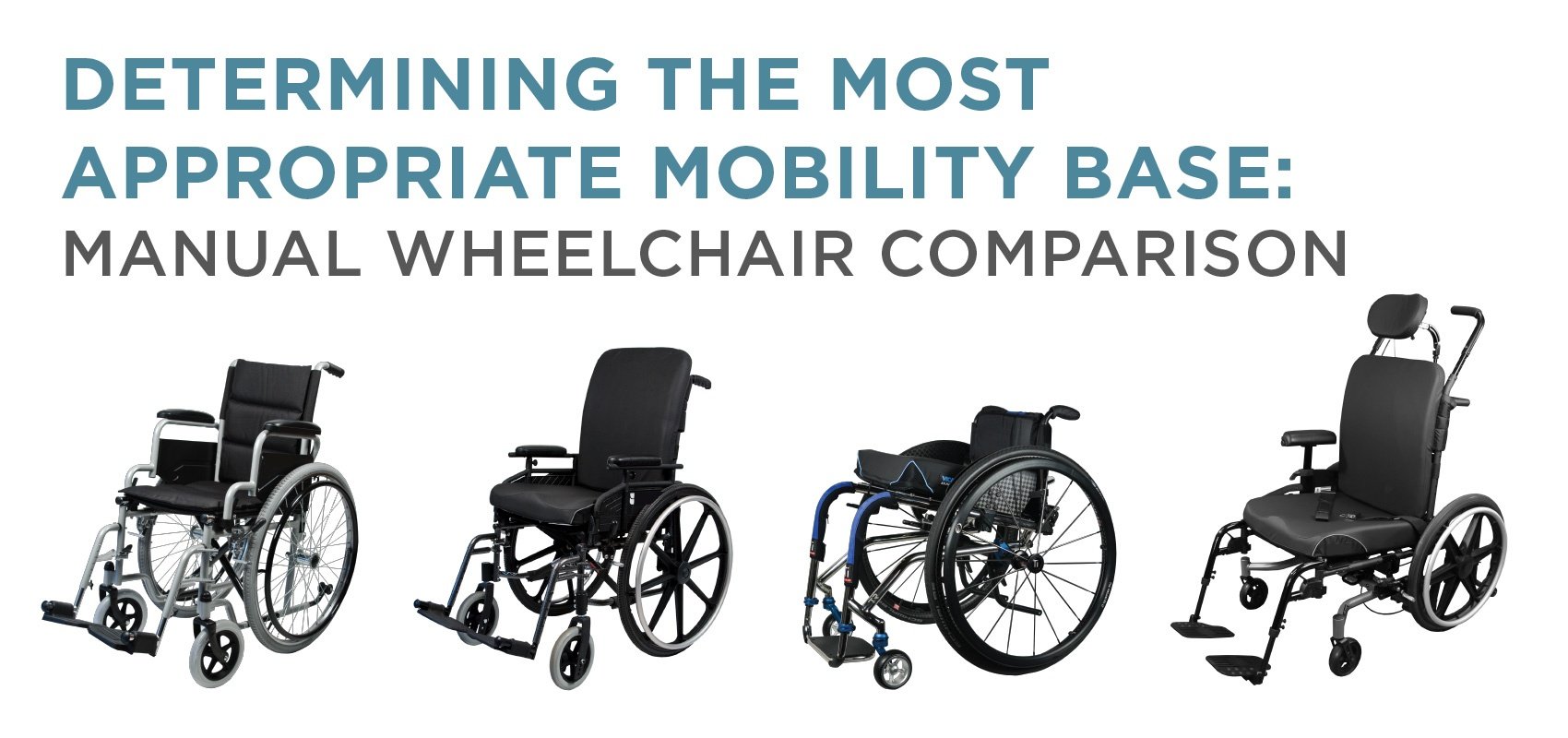
Each type serves different needs—choose based on function, not just cost.
Manual Wheelchairs: For Active Users
Transport Wheelchairs (Companion-Pushed)
- Best for: Occasional use (doctor visits, airports).
- Features: Small wheels, push handles, no handrims.
- Weight: 25–30 lbs.
- Limitation: Not for self-propulsion—inefficient and hard to control.
Basic Manual Wheelchairs
- Best for: General hospital or home use.
- Weight: 38–42 lbs.
- Load capacity: Up to 300 lbs.
- Pros: Affordable, foldable.
- Cons: Heavy to push over time.
Lightweight and Ultralight Models
- Weight: 14–37 lbs.
- Materials: Aluminum, titanium, carbon fiber.
- Frames: Rigid (efficient) or folding (portable).
- Ideal for: Full-time users who value speed, efficiency, and independence.
Fact: Rigid-frame ultralights reduce propulsion effort by up to 40% compared to folding chairs.
Heavy-Duty (Bariatric) Wheelchairs
- Weight capacity: Up to 700 lbs.
- Seat width: 20–30 inches.
- Weight: 38–98 lbs.
- Built for: Stability, durability, and safety with reinforced frames.
Power Wheelchairs: Maximize Independence
Battery-powered chairs offer freedom when pushing isn’t possible.
Drive Configurations
- Rear-wheel drive: Stable at speed, great outdoors.
- Mid-wheel drive: Turns within its own length—perfect for tight hallways and homes.
- Front-wheel drive: Smooth over bumps, good traction on uneven ground.
Key Features
- Joystick controls: Standard for most users.
- Alternative drives: Sip-and-puff, head array, or chin control for limited hand function.
- Tilt and recline: Relieve pressure, improve circulation, aid transfers.
- Standing chairs: Allow upright positioning (e.g., Permobil); boost health and social interaction.
Note: Standing chairs cost $30,000+, require home clearance, and need strong medical justification for insurance.
Scooters vs. Wheelchairs
- Scooters: Best if you can sit upright and transfer independently.
- Use case: Long-distance mobility (malls, parks).
- Drawbacks: Poor indoor maneuverability, not suitable for non-ambulatory users.
- No insurance coverage in most cases—typically out-of-pocket.
Power Assist Devices: Best of Both Worlds
Add motorized help to a manual wheelchair.
Popular Options
- SmartDrive: Portable drive unit (~11 lbs), attaches under seat.
- e.motion: Motorized rear wheel hub.
- Xtender: Built into Quickie chairs; boosts propulsion 1.5–3x.
- MagicWheels: Mechanical gear system—no battery needed.
Benefits
- Reduces shoulder strain by up to 70%.
- Extends range and reduces fatigue.
- Maintains manual chair look and feel.
Trade-offs
- Adds 38–50 lbs.
- Costs $5,000–$8,000.
- Requires charging (except MagicWheels).
Good to know: Medicare may cover power assist if you have documented shoulder pain and medical necessity.
Pediatric Wheelchairs: Grow With the Child
- Adjustable frames: Extend seat depth, width, and back height.
- Stylish designs: Sunrise Quickie Zippie, Invacare Orbits.
- Modular systems: Support changing posture and growth spurts.
- Critical: Early proper fit prevents spinal deformities.
Get the Right Fit: Avoid Pain and Injury
A poorly fitted chair causes pressure sores, poor posture, and joint damage.
Measure Key Dimensions
| Measurement | How to Measure | Ideal Fit |
|---|---|---|
| Seat Width | Across widest part of hips | 1–2 inches wider than hips |
| Seat Depth | From back of pelvis to knee crease | 2–3 inches between seat edge and back of knee |
| Backrest Height | From seat to shoulder blade base | Supports lower back; under shoulder blades unless full support needed |
| Footrest Length | Heel to popliteal fold | Feet flat, knees at 90° |
Visual cue: If the seat is too deep, you’ll feel pressure behind the knees.
Center of Gravity Matters
Axle position affects stability and push efficiency:
- Forward axle: Easier to pop wheelies and climb curbs—but tips forward more easily.
- Rearward axle: More stable, better for long rolls, but harder to maneuver.
- Adjustable axles: Let you test both—ideal for active users.
Taper Improves Alignment
A tapered frame narrows from hips to feet, matching body shape:
- Reduces shoulder strain.
- Improves tracking and efficiency.
- Enhances aesthetics and performance.
Expert tip: Ask for “asymmetric taper” if one leg is shorter or positioned differently.
Choose Frame Type and Material Wisely
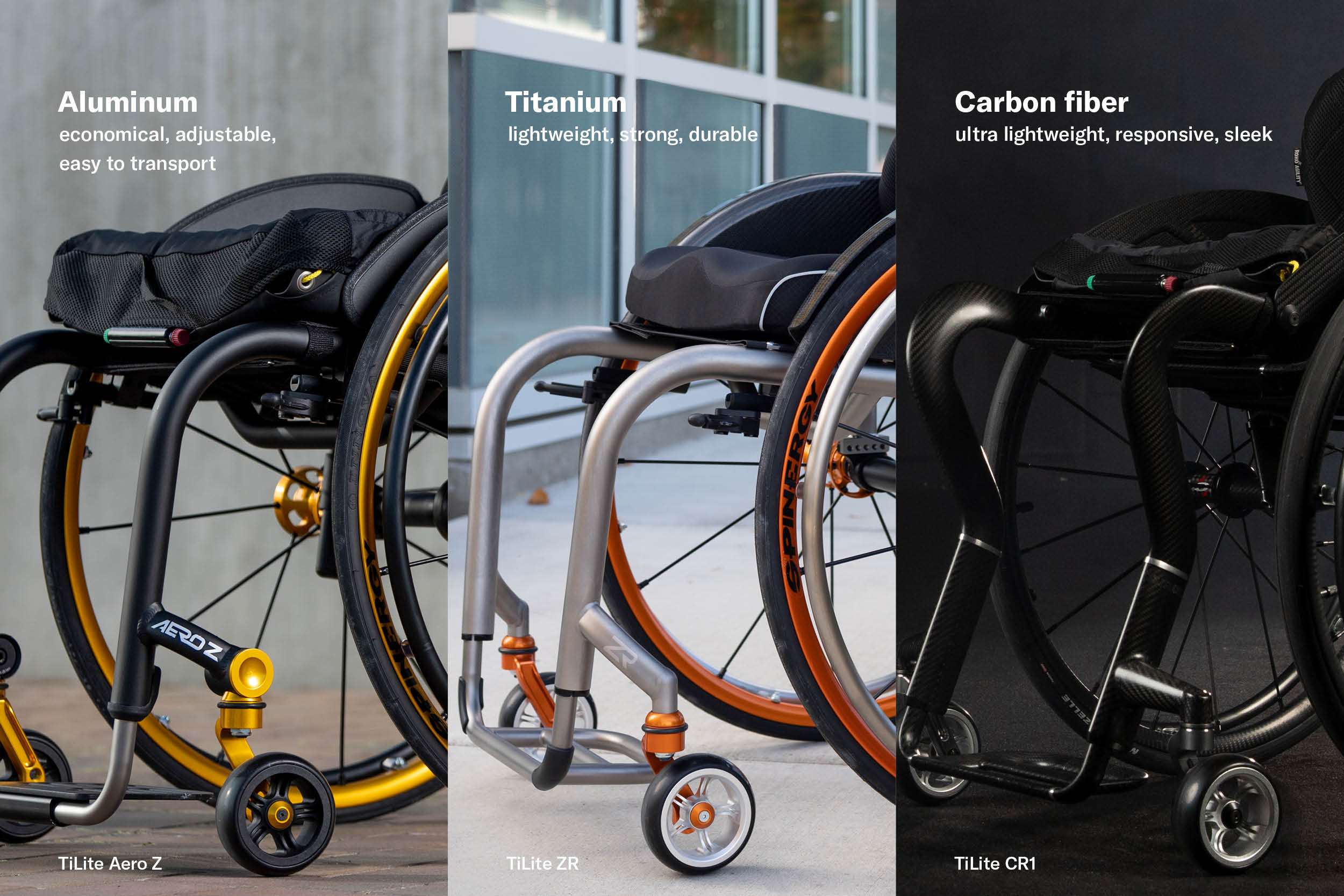
The frame affects weight, durability, and performance.
Rigid vs. Folding Frames
| Feature | Rigid Frame | Folding Frame |
|---|---|---|
| Weight | Lighter | Heavier (folding joints add bulk) |
| Efficiency | Higher (no energy loss) | Lower |
| Durability | Fewer moving parts = longer life | Hinges wear over time |
| Portability | Must disassemble for car | Folds easily; better for travel |
Recommendation: Choose rigid for daily self-propulsion; folding for occasional use or small cars.
Frame Materials Compared
- Titanium: Lightest, strongest, corrosion-resistant. Lasts decades. Expensive.
- Aluminum: Lightweight, affordable, widely used. Good balance of cost and performance.
- Steel: Durable but heavy. Found in basic transport chairs.
Pro tip: Protect aluminum frames with silicone tape to prevent scratches and stress cracks.
Select the Right Seating and Cushion

Your cushion prevents pressure injuries and supports posture.
Cushion Types and Best Uses
| Type | Best For | Pros | Cons |
|---|---|---|---|
| Foam | Short-term or budget use | Light, cheap, no maintenance | Wears out, poor pressure relief |
| Air (ROHO) | High risk of sores | Excellent pressure redistribution | Needs inflation checks, puncture risk |
| Gel (Jay) | Long sitting periods | Conforms well, protects skin | Heavy, can leak |
| Vicair Vector | Active users | Adjustable firmness, durable | Bulky |
| BBD Air | Basic pressure relief | Low-cost, single chamber | Less customization |
| Dynamic (Aquila) | Immobility | Alternating pressure via pump | Needs power, heavy |
| Custom Molded (Aspen) | Severe scoliosis or asymmetry | Perfect anatomical fit | Expensive, long wait |
Warning: Never use a standard foam cushion for full-time sitting—risk of pressure ulcers increases dramatically.
Backrest Options
- Soft/fabric backs: Flexible, comfortable, lightweight.
- Downside: Stretch over time, may cause hip misalignment.
- Rigid backs: Maintain shape, support posture.
- Best for: Trunk instability, long-term use.
Tilt-in-Space vs. Recline: What’s the Difference?
| Feature | Tilt-in-Space | Recline |
|---|---|---|
| Movement | Entire seat tilts back | Backrest reclines; legs may elevate |
| Pressure Relief | Shifts weight to back | Better for full pressure relief |
| Shear Risk | Low (no sliding) | Higher (tissue friction) |
| Use Cases | Posture control, anti-tipping | Bowel programs, feeding, transfers |
Both require prescription and ATP setup.
Optimize Wheels, Tires, and Casters
Your wheels define how smoothly you roll—and where you can go.
Rear Wheel Size and Type
- 24-inch: Standard size. Balances speed and maneuverability.
- 25-inch: Faster on flat surfaces; better for outdoor use.
Hand Rims
- Standard metal: Basic, durable.
- Contoured/Natural Fit: Easier grip, less hand fatigue.
- Rubber-coated: Better traction for weak grip.
Spokes and Hubs
- Spoke wheels: Traditional, lightweight.
- Solid/mag wheels: Puncture-proof, low maintenance.
- Carbon fiber: Ultra-light, stylish, high-performance.
Innovations
- Spinergy FlexRim: Shock-absorbing rim between tire and wheel—reduces arm impact.
- Adjustable push rims: Help with car transfers and storage.
Tire Types: Match to Your Terrain
| Type | Best For | Pros | Cons |
|---|---|---|---|
| Solid (puncture-proof) | Indoors, city streets | No flats, reliable | Harsh ride |
| Pneumatic (air-filled) | Outdoors, rough terrain | Smooth, grippy | Risk of flats |
| Flat-free foam-filled | Mixed use | No flats, moderate comfort | Heavier, less responsive |
Tip: Use pneumatic tires if you walk trails or gravel; solids for carpet and tile.
Casters (Front Wheels)
Critical for stability and bump absorption.
- 5″–6″: Standard for indoor use.
- 8″ or pneumatic: Better for curbs, gravel, outdoor terrain.
- Avoid narrow “rollerblade” casters: Look cool but wobble on uneven ground.
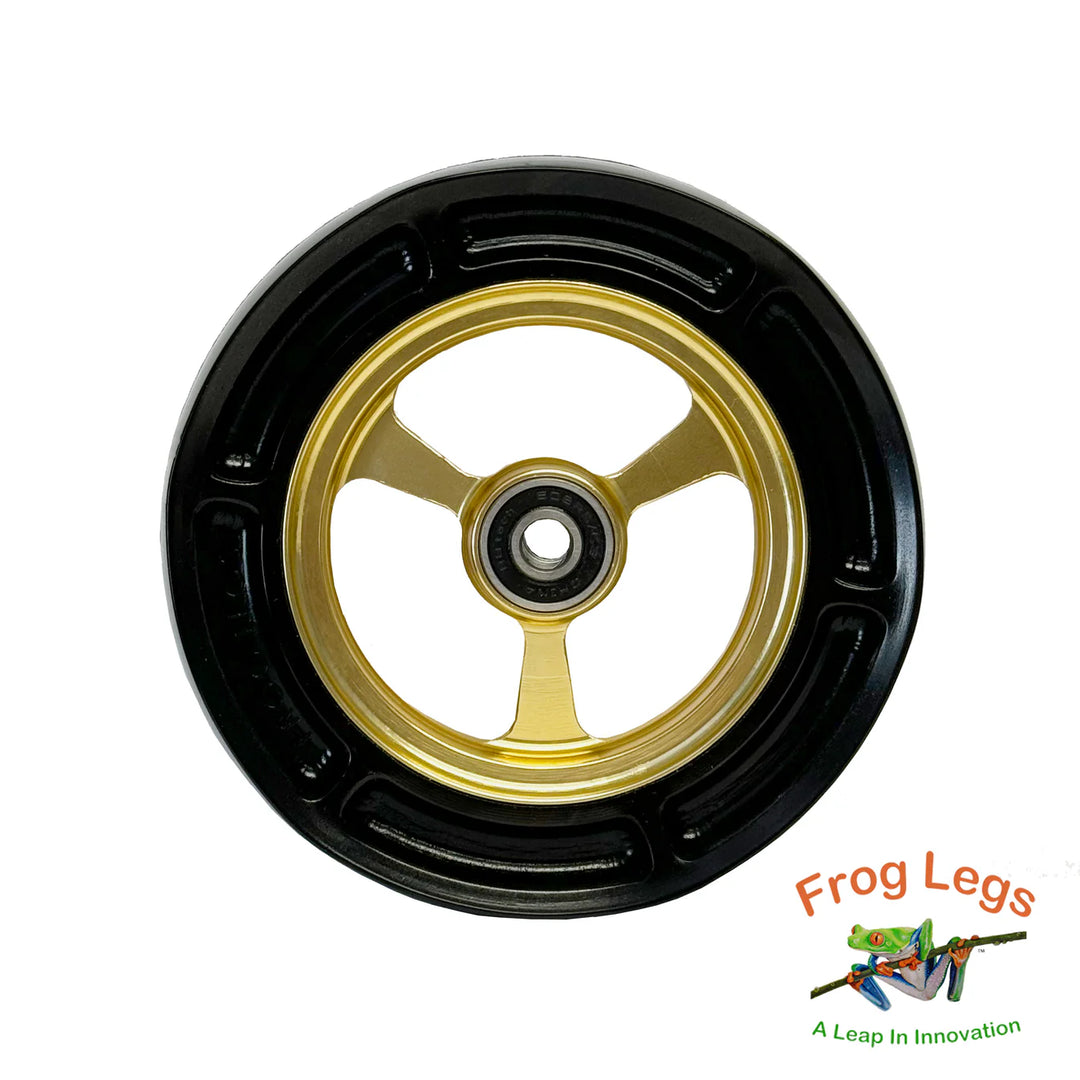
Upgrade: Add Frog Legs—front suspension that lifts casters over obstacles. Medicare reimbursable.
Prioritize Brakes and Safety
Safety isn’t optional—especially for slopes, transfers, and outdoor use.
Brake Types
- Scissor brakes (under seat): Easier to reach, safer for weak hands.
- Push-to-lock (knuckle buster): Harder to engage, can hurt fingers.
Recommendation: Always choose scissor brakes if you have arthritis or limited grip.
Essential Safety Add-Ons
- Anti-tip wheels: Prevent backward falls.
- Seat belts: For users with poor trunk control.
- Shock absorption (Frog Legs, rear suspension): Smoother ride, better control.
- Intelligent braking (power chairs): Auto-adjusts on inclines.
Plan for Portability and Transport
Will it fit in your car? Can you fly with it?
Folding and Disassembly
- Lightweight chairs (<35 lbs) are easier to lift.
- Quick-release wheels help with car storage.
- Some models (e.g., WHILL) disassemble into carry-on-sized parts.
Air Travel Tips
- Battery rules: Gel and AGM batteries are airline-safe (no spills).
- Remove batteries if required—check manufacturer guidelines.
- Label chair with contact info and “Fragile – Medical Device.”
Vehicle Access
- Wheelchair lifts or ramps: For vans/minivans.
- BraunAbility, VMI: Top suppliers for adaptive vehicles.
- Test home and car access during trial period.
Navigate Insurance and Funding
Cost shouldn’t block access—but the process can be tricky.
Medicare Coverage
- Covers medically necessary chairs.
- Pays 80% of approved amount; Medigap covers the rest.
- Requires:
- Face-to-face doctor visit
- Prescription with detailed justification
- Evaluation by PT/OT and ATP
Warning: 80% of Medicare power chair claims were denied in 2011 due to poor documentation.
Medicaid and Private Insurance
- Medicaid: Often covers 100%, especially for children and low-income users.
- Commercial plans: May require 10–30% copay—could mean $1,000+ out-of-pocket.
Out-of-Pocket Purchase
- Pros: Faster delivery, access to premium models and colors.
- Cons: High upfront cost (ultralights: $2,000–$6,000; power chairs: $10,000–$30,000+).
- Tip: Try before you buy—visit DME clinics or borrow from Red Cross.
Work With the Right Professionals
Don’t go it alone—experts ensure the right fit.
Key Roles
- Occupational/Physical Therapist (OT/PT): Assesses mobility, strength, transfers.
- ATP (Assistive Technology Professional): Prescribes and configures equipment.
- DME Supplier: Delivers, sets up, and services the chair.
The Fitting Process
- Doctor referral
- Functional assessment
- Body measurements
- Trial chair (borrowed)
- Custom configuration
- Delivery and training
- Home environment test
Insist: The ATP who evaluated you should deliver and set up the chair.
Match Your Chair to Your Identity
Your wheelchair is part of who you are—make it reflect you.
Style and Personalization
- Choose bold colors, custom paint, or sleek metallic finishes.
- Modern chairs look athletic, not medical.
- Add personalized wheel covers or decals.
Confidence Through Function
- A well-fitted chair boosts independence and self-esteem.
- Don’t sacrifice fit for price—invest in what works for your body and life.
“You don’t need a perfect chair. You need the right one—built for your body, your lifestyle, and your goals.” — Experienced User
Final Checklist: 14 Steps to Choose Your Wheelchair
- ✅ See your doctor for a mobility referral
- ✅ Get assessed by an OT/PT and ATP
- ✅ Measure seat width, depth, and back height
- ✅ Decide: manual, power, or power-assist
- ✅ Choose frame: rigid (efficient) or folding (portable)
- ✅ Pick material: aluminum (value) or titanium (premium)
- ✅ Select wheels: 24” or 25”, pneumatic or solid
- ✅ Choose casters: 6” or 8”, add Frog Legs for bumps
- ✅ Pick a pressure-relief cushion (ROHO, Vicair, gel)
- ✅ Set axle position and taper for balance
- ✅ Review insurance: gather prescriptions and codes
- ✅ Test chairs in person at a DME clinic
- ✅ Involve the user in every decision
- ✅ Confirm delivery, training, and warranty terms
Choosing how to choose a wheelchair comes down to one truth: the best chair isn’t the cheapest or flashiest—it’s the one that fits you. By focusing on function, fit, and future needs, you gain more than mobility. You gain freedom.