
Transferring from a wheelchair to a car seat is a daily challenge for many individuals with limited lower-body mobility. Without proper technique, this task can lead to falls, shoulder strain, or loss of independence. A transfer board—a smooth, rigid sliding surface—bridges the gap between your wheelchair and vehicle seat, enabling safer, more controlled movement using upper-body strength. When used correctly, it reduces joint stress, prevents injuries, and supports confident, self-initiated transfers. This guide provides a complete walkthrough of how to use a transfer board effectively, covering everything from selecting the right model to mastering smooth entry and exit. Whether you’re transferring alone or with caregiver support, these steps will help you move safely, maintain balance, and preserve long-term mobility.
Choose the Right Transfer Board for Your Vehicle
Match Board Length to Your Car Type
The first step to a successful transfer is choosing a board that fits your vehicle. Shorter boards (24 inches) work best in compact cars where the distance between the wheelchair and car seat is narrow. For SUVs, minivans, or crossovers, go with a 36-inch board to safely span the wider gap. High-clearance trucks or lifted vehicles are generally not suitable—the elevation difference often exceeds safe limits, increasing fall risk and strain.
✅ Pro Tip: Measure the distance from your wheelchair seat to the car seat before purchasing. Add a few inches for overlap to ensure full support during the slide.
Pick the Best Shape for Smooth Movement
- Flat boards (e.g., Equinox): Simple, durable, and ideal for users with strong upper body control. They offer a stable glide but may require more effort to align.
- Crescent-shaped boards (e.g., Beasy Glider): Contoured to match car seat curves, allowing smoother transitions and better alignment. Many feature a visible front edge to confirm proper placement.
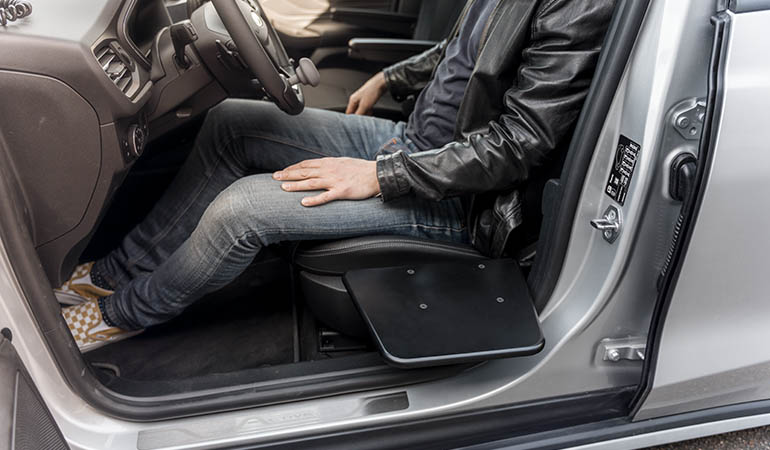
- Vehicle-mounted boards (e.g., Brrawnability): Install permanently in your car using floor anchors. They flip up when not in use, stay out of the way, and are perfect for daily drivers.
✅ Visual Cue: Look for a board with a clear front indicator—this helps you position it correctly every time.
Check Weight Capacity and Surface Quality
Ensure your board supports your body weight—most handle up to 328 lbs (149 kg). Always verify the manufacturer’s rating. Use only boards with a smooth, non-abrasive surface to minimize friction. Avoid textured, scratched, or worn boards that increase resistance and strain on shoulders.
Prepare Your Car and Surroundings
Align Seat Heights for Easier Transfers
For the smoothest slide, match your wheelchair seat height to the car seat. A difference of up to 6 inches is manageable, but greater gaps make transfers harder and riskier. If your car seat is higher:
- Place a 6–8 inch platform under your wheelchair (e.g., a sturdy riser or garage floor).
- This reduces the “uphill” effort and protects your shoulders.
⚠️ Warning: Avoid using transfer boards in high-riding trucks or SUVs—excessive elevation increases injury risk and makes sliding unsafe.
Adjust Car and Wheelchair Settings
Before transferring:
– Move the car seat forward to create space for your legs and wheelchair.
– Recline the seat slightly if needed for headroom.
– Roll down the window—this gives you a secure grip point.
– Remove or swing away the wheelchair armrest on the transfer side.
– Lock both wheelchair brakes firmly to prevent movement.
✅ Pro Tip: Clear the car floor of bags, pedals, or obstacles to make leg entry easier.
Position the Wheelchair at the Correct Angle
Use a 45-Degree Approach
Place your wheelchair at a 45-degree angle to the open car door. This clears the front wheel from the car frame and creates a straighter transfer path. Adjust slightly based on your door swing and interior space.
✅ Visual Cue: Align the edge of your wheelchair seat with the back corner of the car seat—this ensures the board lands correctly.
Identify Your Support Points
Use available car features to help pull yourself across:
– Fold-down door handle
– Door frame
– Headrest post
– Lower window edge (if rolled down)
These provide leverage during the push-and-slide motion and improve control.
Step-by-Step: Entering the Car with a Transfer Board
Slide the Board Under You
- Lean slightly backward or away from the car side to shift your weight.
- Slide one end of the board under your buttocks and thigh on the transfer side.
- Place the other end flat on the car seat, aiming toward the back corner.
- Ensure the front edge is visible—especially with crescent boards like the Beasy Glider.
❌ Don’t sit directly on the board—it should be beneath you, not replacing the seat.
Push, Pull, and Slide Across
- Push up from the opposite armrest (the side away from the car).
- Pull yourself toward the car using the door handle or window edge.
- Begin sliding in small, controlled motions—don’t rush.
- Lean your head and shoulders opposite the direction of movement (e.g., lean right when moving left) to stay balanced.
💡 Technique Tip: This is an uphill transfer—gravity works against you. Engage your core and use both arms evenly to avoid shoulder strain.
Complete the Transfer
- Slide fully onto the car seat—ensure your entire body is supported.
- Bring one leg into the car at a time, using your hands or a caregiver.
- Once both legs are in, fasten your seatbelt for stability.
- Carefully remove the board from under your hips.
✅ Caregiver Role: Hand the board in advance, assist with leg positioning, and help remove the board safely.
Step-by-Step: Exiting the Car Safely
Prepare the Transfer Path
- Position the wheelchair at a 45-degree angle outside the open door.
- Lock the brakes and remove the armrest on the transfer side.
- Have the board ready—hand it to the user or place it within reach.
Place the Board Correctly
- Lean away from the transfer side.
- Slide the board under your buttocks and thigh, extending it fully onto the wheelchair seat.
- Ensure it’s not placed too far back—this can block your path.
Begin the Glide
- Support your upper body with your arms.
- Shift weight onto the board and begin sliding in small, deliberate movements.
- Let gravity assist, but maintain control—don’t slide too fast.
- A caregiver should stand nearby, ready to protect your head and upper body.
⚠️ Safety Reminder: Speed increases fall risk. Move slowly and steadily.
Finalize Seating
- Once fully on the wheelchair, stabilize your position.
- Bring each leg out one at a time.
- Remove the board and reattach the armrest.
- Unlock brakes only after you’re fully seated and balanced.
Caregiver Safety and Support Tips

Support Without Lifting
Caregivers should never lift the user. Instead:
– Use a gait (transfer) belt to guide and stabilize.
– Give verbal cues: “Shift your weight,” “Push now,” “Lean left.”
– Help with leg positioning and board handling.
Protect Your Back
To avoid injury:
– Stand with feet shoulder-width apart.
– Avoid twisting at the waist.
– Keep your back straight and bend at the knees.
– Use the gait belt to pull sideways, not upward.
✅ Pro Tip: Caregivers should practice the sequence mentally before each transfer to stay prepared.
Master Proper Transfer Technique
Use Core and Upper Body Together
- Engage your core muscles throughout to maintain balance.
- Push with both arms—don’t rely on one side.
- Lean opposite the movement direction to counterbalance.
Break Motion into Small Steps
Instead of one large slide:
– Push, slide a few inches, pause.
– Re-grip, reposition, repeat.
– This reduces strain and improves control.
✅ Benefit: Smaller movements build confidence and reduce fatigue.
Safety Rules You Must Follow
Always Lock Wheelchair Brakes
Before any transfer, confirm both brakes are fully engaged. Even slight movement can cause a fall.
Verify Surface Stability
Ensure both the wheelchair and car are on level, solid ground. Avoid transfers on slopes or gravel.
Practice First in a Safe Setting
Begin in a controlled environment, like a garage with a 6-inch elevation. This reduces the height gap and makes sliding easier.
🛑 Critical: Never attempt independent transfers without training from a physical or occupational therapist.
Know Your Physical Limits
Strength and Stability Requirements
Successful transfers require:
– Strong arms and shoulders
– Trunk control to prevent tipping
– Core strength for balance
– Bilateral arm use
🩺 Assessment Tip: Have a therapist evaluate your transfer readiness after injury, surgery, or prolonged immobility.
When to Consider Alternatives
If board transfers feel unsafe:
– Vehicle lifts or ceiling hoists
– Wheelchair-accessible vehicles (WAVs)
– Swivel car seats
– Boards with handles for better grip
🔍 Remember: The best method matches your strength, vehicle, and comfort.
Train for Independence
Start with Supervision
Most users need initial help from a caregiver. Use a gait belt during early attempts to build confidence.
Repeat to Build Muscle Memory
- Perform multiple practice transfers under supervision.
- Focus on smooth, controlled motions.
- Gradually reduce assistance until you can transfer independently.
✅ Goal: Achieve safe, self-initiated transfers with minimal support.
Maintain and Store Your Board
Inspect Regularly
Check for:
– Cracks or warping
– Worn glide surface
– Loose edges or splinters
Replace the board immediately if damaged.
Clean and Store Properly
- Wipe with mild soap and water.
- Store flat or hung vertically to prevent bending.
- Keep portable boards in a car trunk or wheelchair pouch.
- Vehicle-mounted boards (like Brrawnability) fold into the door pillar—stay secure and out of the way.
Final Tips for Success
Using a transfer board isn’t just about mobility—it’s about autonomy, dignity, and freedom. With the right setup, proper technique, and consistent practice, you can enter and exit your vehicle safely and confidently. Wear non-slip clothing, keep hands dry, and reposition the car seat daily for optimal alignment. Every successful transfer starts with preparation: choose the right board, align surfaces, and move with control—not speed.
🔄 Remember: Always consult a physical or occupational therapist before starting independent transfers. They can assess your strength, customize your technique, and ensure your safety every step of the way.