
If you’ve recently started using a self-propelled wheelchair, you’re taking a powerful step toward autonomy. Unlike standard wheelchairs that require a caregiver to push, self-propelled models let you move independently by pushing the hand rims on the large rear wheels. This control brings freedom—but it also requires technique, safety awareness, and proper setup to prevent injury and maximize efficiency. Whether you’re adjusting to life after surgery, managing a long-term condition, or supporting a loved one, mastering your wheelchair can transform your daily experience.
Using a self-propelled wheelchair isn’t just about getting from point A to B—it’s about doing so safely, comfortably, and with confidence. Poor technique can lead to shoulder strain, fatigue, or even falls. But with the right knowledge, you can build strength, navigate obstacles, and enjoy greater independence in your home, community, and beyond. This guide covers everything from initial setup and safe transfers to propulsion techniques, curb navigation, and injury prevention—so you can move with control and ease.
Set Up Your Wheelchair Correctly Before Use
A properly assembled and adjusted wheelchair is essential for safety, comfort, and efficient movement.
Open the Frame Safely to Avoid Injury
Always stand to the side when opening your chair. Place your hands on the sides of the seat fabric and press down firmly until the frame clicks into place. Never put your fingers near the folding joints—these can snap shut with enough force to cause serious pinching or crushing. Once open, check that the frame is stable, the seat is taut, and there’s no wobbling. If the chair doesn’t lock securely, do not use it.
Adjust Footrests and Armrests for Comfort and Safety
Swing the footrests forward and lower them into position. Your feet should rest flat on the footplates with your knees bent at approximately 90 degrees. If your chair came with transit clips (used during shipping), remove them now. Use a spanner (typically size 10 or 11) to adjust the height if needed.
For easier transfers, remove the armrests by releasing the levers at their base. Reattach them once you’re seated to provide support and stability. Removable arms are especially helpful when moving to and from a bed, toilet, or car seat.
Confirm Safety Features Are Active
Always fasten the lap belt before moving—it prevents sliding forward during stops or turns. Check that the anti-tip bars are deployed, especially if you’ll be on a slope or navigating curbs. Test both wheel locks by engaging and releasing them; they should hold the chair firmly in place on flat and inclined surfaces.
Get In and Out of the Wheelchair Safely
Safe transfers protect your balance, prevent falls, and reduce strain on your body and caregivers.
How to Sit Down Without Losing Balance
- Lock both brakes to prevent movement.
- Position the footrests and place your feet securely.
- Use the armrests or a nearby surface (like a table or bed) to lower yourself slowly.
- Slide your hips fully back into the seat to maintain proper posture.
- Fasten the lap belt.
- Release the brakes only after you’re fully seated and ready to move.
Pro Tip: Practice this process in a clear, open area with someone nearby until you feel confident.
How to Stand Up Safely and Maintain Control
- Apply both brakes.
- Unbuckle the lap belt.
- Remove your feet from the footplates.
- Swing the footrests up and out of the way.
- Use the armrests for support as you shift your weight forward and push up with your arms and legs.
- Rise steadily—avoid rushing, especially if balance is a concern.
If needed, use a transfer board or ask for spotting help until you’re comfortable with the motion.
Master Efficient Propulsion Techniques to Prevent Injury
How you push the wheels directly impacts your energy, joint health, and long-term mobility.
Use the Semicircular Stroke for Smooth, Low-Impact Movement
The most effective technique is the single loop pattern:
– Start your hand at the top-rear of the push rim (around 10 o’clock).
– Push forward and down in a long, smooth arc.
– Release near the bottom-front (around 4 o’clock).
– Let your arm recoil naturally—avoid short, choppy strokes.
This method reduces shoulder strain, improves momentum, and conserves energy over time.
Pushing Uphill? Use Short, Rapid Strokes and Lean Forward
On inclines, use quick, powerful pushes to maintain speed. Lean slightly forward to avoid tipping backward. Keep your shoulders aligned over the wheels for maximum power. If the hill is steep, a caregiver can assist by gently lifting the push handles while you continue to propel.
Control Your Speed When Going Downhill
Never free-wheel. Move backward down curbs and use your palms on the rims to brake gradually. Keep your body centered and avoid leaning forward. Apply steady pressure to lower each wheel slowly and maintain control.
Adaptations for Limited Upper Body Strength
If you can only use one hand, consider a hemi-height wheelchair with a lower seat, allowing you to propel with one hand and the same-side foot. For added support, PAPAWs (Pushrim-Activated Power-Assist Wheels) amplify your push with motorized assistance—ideal for hills or long distances. Other options include lever drives, arm cranks, or geared hubs, though availability varies.
Navigate Curbs and Obstacles with Confidence
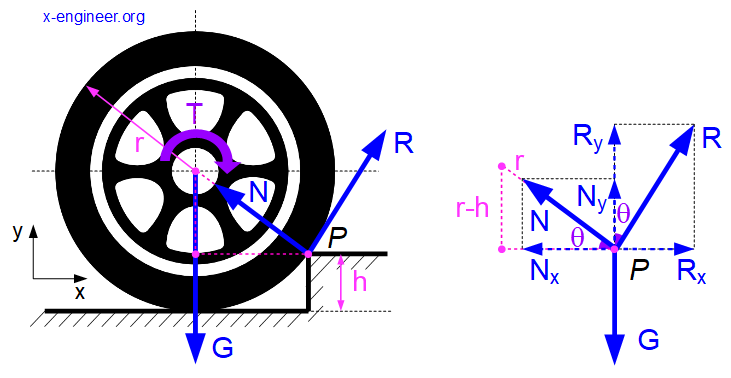
Outdoor mobility requires planning and the right technique to stay safe.
Climb Curbs Forward with Proper Technique
- Approach the curb straight-on—never at an angle.
- Push the front wheels up onto the curb.
- Tilt the chair back using the anti-tip bar or by pulling on the rims.
- Step forward and push the rear wheels up.
- Roll fully onto the sidewalk.
A caregiver can help by placing a foot on the anti-tip bar and lifting slightly as you push.
Descend Curbs Backward to Avoid Tipping
- Turn to face away from the curb.
- Check behind for traffic or obstacles.
- Lower the rear wheels first.
- Control the front wheels with your palms on the rims.
- Keep your body centered—do not lean forward.
❗ Never go down curbs facing forward—this significantly increases the risk of tipping forward.
Handle Slopes and Rough Surfaces Wisely
- Ascend forward, descend backward on inclines.
- Avoid pavement cambers (slanted roads) that pull you sideways.
- On gravel or grass, larger 6” casters and thick-tread tires improve traction.
- Keep tires inflated to 25–30 psi to reduce rolling resistance on pavement.
Optimize Chair Fit for Easier Movement and Better Control
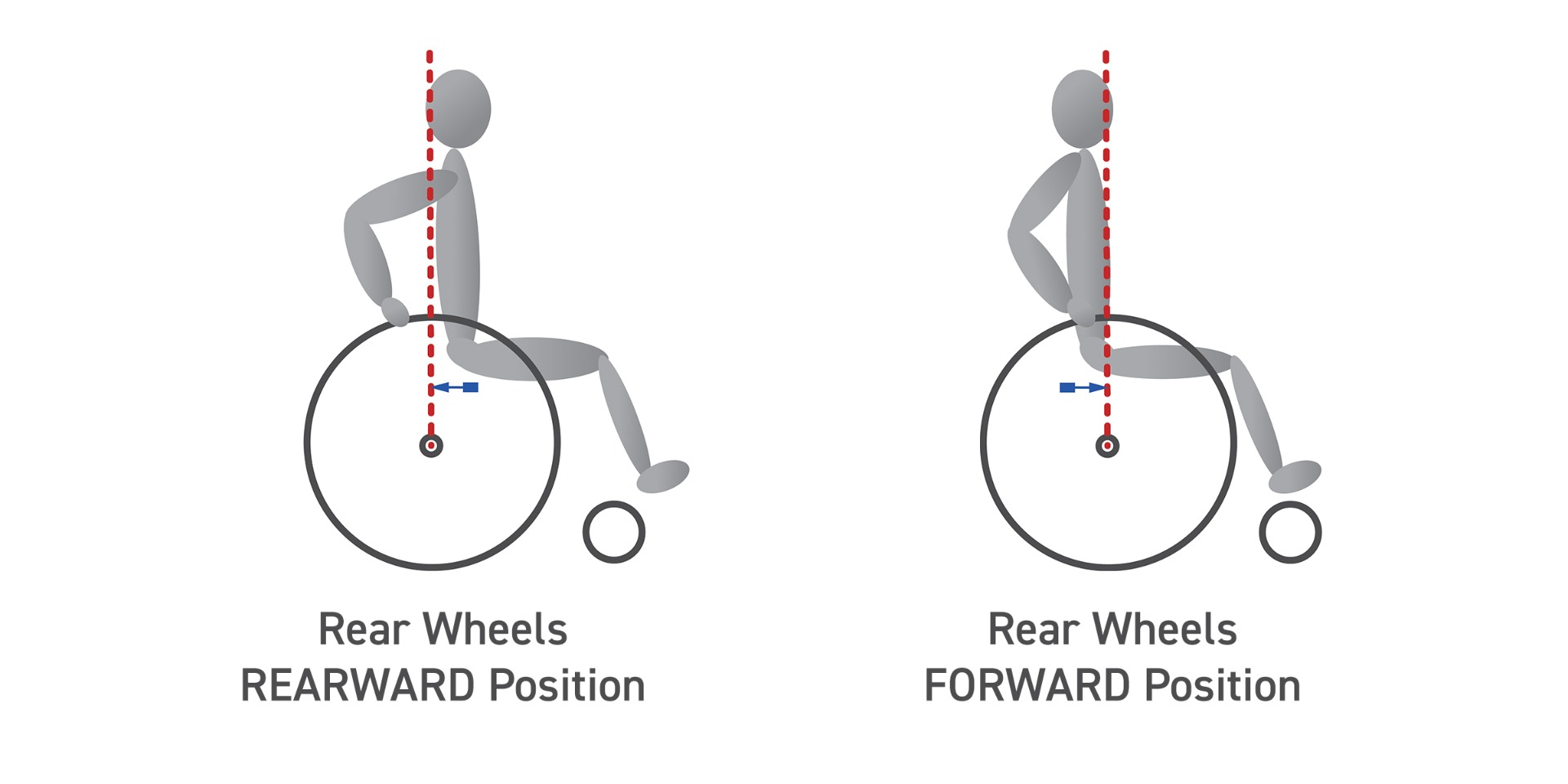
A well-fitted chair reduces effort and prevents long-term strain.
Match Wheel Position to Your Natural Arm Reach
When seated, let your arms hang loosely. Your fingertips should touch or be just below the center of the rear wheel. If you’re reaching too far, adjust the axle forward using an adjustable axle plate (common on K0004/K0005 chairs). Too far forward increases tipping risk; too far back strains your shoulders.
Choose the Right Caster Size for Your Environment
- 4–5” casters: Great for tight indoor turns but sink in soft ground.
- 6–8” casters: Better for grass, gravel, and uneven sidewalks.
- 6” offers the best balance for most users.
Consider Camber and Tires for Stability and Efficiency
- Slight camber (angled rear wheels) improves stability and turning—common in sports chairs but useful for everyday users.
- Use high-pressure pneumatic or solid tires to reduce rolling resistance.
- Keep tires properly inflated—underinflated tires make pushing much harder.
Follow Key Safety Rules for Daily Use
Staying safe means protecting yourself, others, and your equipment.
Wear Protective Gear to Prevent Injuries
- Wheelchair gloves (like Globaleather) prevent blisters, improve grip, and protect thumbs.
- Spoke guards stop fingers from getting caught in the wheel spokes—especially important for children or those with limited hand control.
Always Use the Lap Belt for Stability
Fasten it every time you move. It prevents forward sliding during stops or turns and adds stability on uneven ground.
Stay Aware of Your Environment
- Scan ahead for drop curbs, obstacles, and traffic.
- Remember your feet extend beyond the chair—watch for people in crowds.
- Avoid sudden turns. Announce movements in shared spaces.
- Never allow someone to push you without warning—this can injure fingers on the rims.
Build Strength and Confidence Through Practice
Propelling a wheelchair takes upper body strength. Start slow and build endurance.
Train Key Muscles with Resistance Bands
Propulsion uses your deltoids, trapezius, pectorals, and triceps—not biceps. Strengthen them by looping a resistance band around the back of your chair and pushing forward as if propelling. Do 2–3 sets of 10–15 reps daily.
Practice in a Safe, Open Space
Start in a flat, open area like a parking lot or hallway. Practice:
– Starting and stopping
– Turning in tight spaces
– Simulating curb climbs
– One-handed maneuvers
One user, Joceline, practiced on a sloping road despite feeling self-conscious—now she travels independently to London.
Expect Initial Fatigue—It Gets Easier
Soreness and tiredness are normal at first. As your body adapts, your stamina will improve. As user Pollx says: “Every challenge is part of the journey.”
Maintain and Clean Your Chair for Longevity
Regular care keeps your wheelchair safe and functional.
Clean After Each Use
- Wipe the seat and back with warm soapy water and a soft cloth.
- Clean wheels and rims with a brush and hot soapy water.
- Dry thoroughly to prevent rust.
- If using a loaned chair (e.g., British Red Cross), return it clean.
Perform Weekly Checks
Inspect for:
– Loose bolts or nuts
– Worn or flat tires
– Brake function
– Frame cracks or bends
Do not use damaged equipment. Report issues immediately.
Store Properly to Prevent Damage
- Fold only after raising footrests.
- Stand to the side, lift the center of the seat canvas upward.
- Keep fingers clear of joints.
- Store in a dry place—avoid direct sunlight or damp areas.
Transport and Return Your Wheelchair Safely
Moving your chair in a car requires care.
Load Safely and Securely
- Remove footrests and store inside the vehicle.
- Lower push handles by pressing latches at the base.
- Lift into the trunk or back seat.
- Secure with a seatbelt if in the passenger area.
Choose lightweight or folding models for easier transport.
Return Loaned Equipment Correctly
If using a loaned chair:
– Return all parts: seat belt, cushion, leg rests, footplates, extensions.
– Clean thoroughly.
– ❗ Missing or damaged items may incur fees.
– Contact support: 0300 456 1914
Prevent Repetitive Strain Injuries with Proper Technique
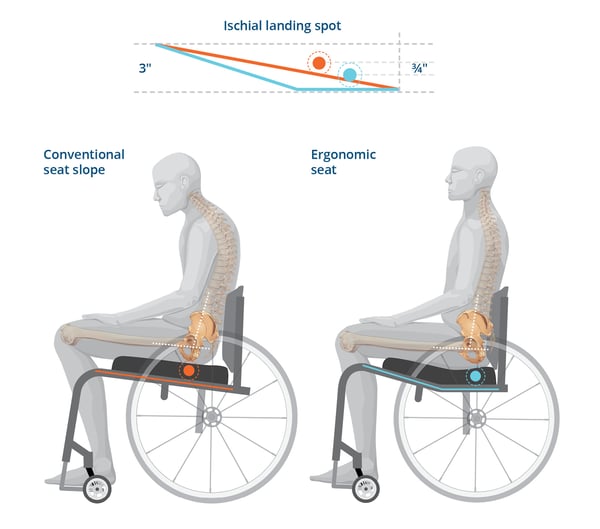
Long-term use can lead to shoulder, wrist, or elbow pain if technique or fit is poor.
Use Proper Form to Protect Joints
Stick to long, smooth strokes. Avoid short, jerky pushes that increase joint stress. Re-evaluate your propulsion style if you feel pain.
Ensure Correct Fit with Professional Help
Have a specialist (ATP or SMS-certified) assess:
– Axle position
– Seat height
– Backrest support
– Weight distribution
Reassess annually or after changes in strength or mobility.
Consider Power Assist for Long-Term Comfort
If fatigue or pain develops, PAPAWs add motorized help while keeping the chair lightweight. They’re ideal for hills, long distances, or users with limited endurance.
Enjoy the Benefits of Independence
A self-propelled wheelchair isn’t just a mobility aid—it’s a tool for freedom.
Regain Control of Your Daily Life
Move on your schedule. Navigate stores, parks, and transit without relying on others. One user said: “Enjoy… mine’s a 99 please!”—proving mobility can come with a smile.
Stay Active and Healthy
Daily propulsion builds upper body strength and improves heart health. It helps avoid “bingo wings” and supports participation in wheelchair sports.
Stay Practical and Mobile
Self-propelled chairs are:
– More compact than power chairs
– Often foldable
– Easy to store and transport
– Lower maintenance
Final Note: Using a self-propelled wheelchair is a journey. Start with small goals—mastering turns, handling a curb, walking into a shop alone. With practice, these actions become second nature. Embrace the learning curve, seek support when needed, and celebrate every win. Your independence is worth the effort.