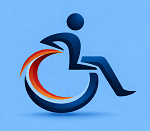
You’ve seen it on parking spots, restroom doors, and transit stations—the blue square with a white figure in a wheelchair. At first glance, it seems simple: this space is for people who use wheelchairs. But the wheelchair sign meaning goes far beyond mobility aids. It’s a universal symbol of access, inclusion, and civil rights. Yet, widespread misunderstanding persists. Many assume only those visibly using a wheelchair qualify for accessible spaces—leading to stigma, confrontation, and exclusion.
The International Symbol of Access (ISA) was never meant to represent just wheelchairs. It signals that a facility, service, or path is usable by people with a range of disabilities—including invisible conditions like chronic pain, autism, or heart disease. Despite this, outdated perceptions linger. The symbol itself has even been challenged for portraying passivity, sparking a global movement to redesign it for greater empowerment.
This guide unpacks the true meaning of the wheelchair sign, from its historical roots and legal requirements to evolving designs and cultural debates. Whether you’re a business owner, advocate, or someone navigating accessibility, you’ll learn what the symbol means today—and where it’s headed tomorrow.
Origins of the International Symbol of Access
Designed for Global Recognition
In the 1960s, as disability rights movements gained momentum, countries developed their own access symbols—France, Canada, the UK, and the US each had different versions. This inconsistency created confusion in international travel and public infrastructure. A unified symbol was needed.
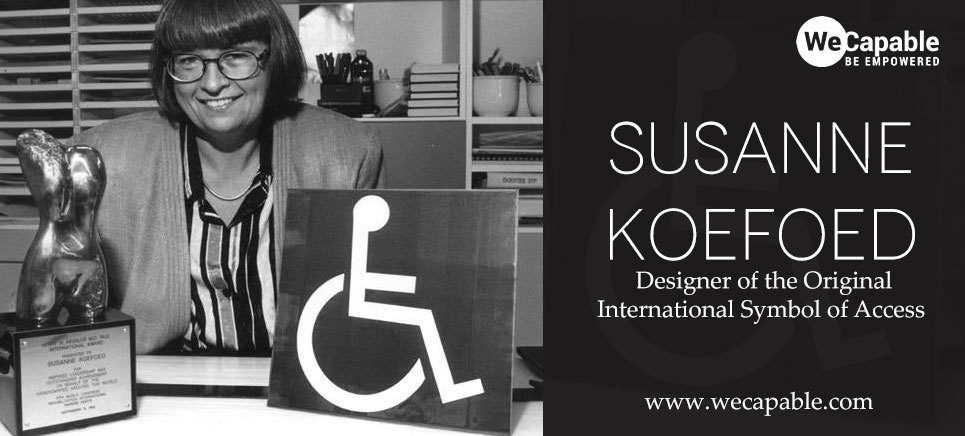
The solution emerged in 1969, when Susanne Koefoed, a Danish graphic design student, won a competition hosted by Rehabilitation International (RI). Her design—a stylized white figure in a wheelchair on a blue background—was chosen for its clarity and neutrality. Early feedback noted the stick-figure looked too abstract, so a circular head was added to humanize it.
Adopted by the United Nations and ISO
By 1974, the United Nations formally recognized the ISA, accelerating global adoption. The International Organization for Standardization (ISO) standardized it under ISO 7001, ensuring consistent use in public spaces worldwide. Crucially, RI Global made the symbol free to use, avoiding patents or trademarks to encourage universal access.
Corporate partners like 3M Corporation and Seton Identification Products mass-produced ISA signs, embedding them into cities across continents. Within a decade, the symbol became one of the most recognizable icons on Earth.
Legal Meaning in the United States

Mandated by the Americans with Disabilities Act
In the U.S., the ISA is legally required under the Americans with Disabilities Act (ADA) of 1990. The ADA mandates that all public accommodations—restaurants, stores, offices, hospitals—must display the symbol on accessible features like restrooms, entrances, elevators, and parking.
The U.S. Access Board sets precise standards for placement, size, color, and visibility. Non-compliance isn’t just a design flaw—it’s a civil rights violation.
Penalties for Non-Compliance
Failure to follow ADA signage rules can lead to:
– Fines up to $75,000 for a first offense, rising to $150,000 for repeat violations.
– Civil lawsuits filed by individuals denied access.
– Public complaints that damage reputation and trust.
Signage isn’t optional—it’s a legal safeguard ensuring equitable access and protecting businesses from liability.
What the Wheelchair Symbol Actually Means

Not Just for Wheelchair Users
Despite its name, the wheelchair sign does not mean “for wheelchair users only.” According to ISO and ADA guidelines, it represents universal access—a facility usable by people with various disabilities, including:
- Mobility impairments (with or without devices)
- Chronic fatigue or pain
- Neurological conditions (e.g., MS, Parkinson’s)
- Respiratory or cardiac limitations
- Cognitive, sensory, or mental health disabilities
The symbol communicates: This space is designed to be inclusive.
Misunderstandings and Social Harm
Because the icon shows a wheelchair, many assume only those visibly using one can use accessible parking or restrooms. This leads to real-world consequences:
- People with invisible disabilities are questioned or shamed in parking lots.
- Those with temporary injuries (e.g., post-surgery) face hostility.
- Parents of children with autism or developmental delays are accused of misuse.
These confrontations stem from a lack of awareness. The symbol isn’t about appearance—it’s about functional need.
ADA Signage Requirements: What’s Required

Outdoor Parking Sign Rules
To comply with ADA standards, parking signs must meet strict criteria:
- Symbol height: Minimum 6 inches
- Mounting height: Bottom of sign at least 60 inches above ground
- Visibility: Must remain visible when a vehicle is parked
- Directional clarity: Face the parking space, unobstructed by trees or poles
- Van-accessible designation: Include a second sign below stating “Van Accessible”
Color must be white on royal blue for high contrast. Reflective materials ensure visibility at night.
Indoor Sign Specifications
For permanent rooms like restrooms or elevators, ADA requires:
- Height: Mounted between 48 and 60 inches from floor to centerline
- Location: On the latch side of the door
- Tactile elements:
- Raised characters (at least 1/32 inch high)
- Braille beneath text
- Non-glare finish to prevent visual strain
Elevator call buttons must feature an embossed ISA to identify accessible controls.
Wayfinding and Directional Signs
When paired with an arrow and no text, the ISA indicates the direction of the nearest accessible route. These signs guide users where paths diverge—such as stairs vs. ramp.
Importantly, they do not restrict access. Everyone can use the accessible path; the sign simply ensures it’s easy to find.
The Accessible Icon Project: A Modern Redesign
Why Change the Symbol?
Critics argue the traditional ISA conveys passivity and dependence. The upright, static figure lacks motion or agency—reinforcing outdated stereotypes of disability as helplessness.
In 2010, artist Sara Hendren and philosopher Brian Glenney launched the Accessible Icon Project—a form of design activism aimed at shifting cultural perception. Their goal? To show disability as dynamic, empowered, and self-directed.
Key Design Changes
The new icon features:
– Forward-leaning head: Suggests awareness and intention
– Arms pushing wheels: Symbolizes active movement
– Single visible wheel with cutouts: Implies motion
– Organic limb shapes: Matches modern ISO DOT 50 standards
– Same color scheme: White on blue for consistency
Early versions were clear stickers placed over official signs—creating a visual dialogue between old and new.
From Street Art to Policy Change
Guerrilla Activism Begins in Boston
The project started as a DIY campaign in Boston, where activists applied stickers over city signs. It wasn’t vandalism—it was provocation, meant to spark conversation.
Media coverage followed. The story reached disability advocates globally, transforming the icon from art into a symbol of social change.
Community-Led Transformation
The team partnered with EPIC, a nonprofit staffed by young adults with disabilities, to lead sign-replacement events. These weren’t top-down reforms—they were community actions, giving disabled people control over their own representation.
In 2014, New York State officially adopted the Accessible Icon for state facilities. Connecticut followed in 2016. Though not yet federally recognized, the icon has gained traction in schools, museums, and private businesses.
Legal Status of the New Wheelchair Symbol
Still Not Federally Approved
The U.S. Access Board has not endorsed the Accessible Icon as a replacement. In most jurisdictions, the original ISA remains legally required for ADA compliance.
However, the new icon can be displayed alongside the ISA in non-regulated spaces—like websites, marketing materials, or interior walls—to signal inclusivity.
Risk of “Sign-Washing”
Some critics warn of “sign-washing”—using the new icon to appear progressive without making real accessibility improvements. True inclusion requires more than updated graphics: it demands ramps, training, policies, and listening to disabled voices.
The Accessible Icon Project acknowledges this. They see the symbol not as a solution, but as a conversation starter—a way to redirect attention to systemic barriers.
Broader Accessibility Symbols You Should Know
Beyond Mobility: Symbols for Sensory and Cognitive Access
The ISA is just one part of a larger system. Other standardized symbols communicate specific accommodations:
| Symbol | Meaning |
|---|---|
| Braille symbol | Materials available in Braille |
| Large Print (16–20 pt) | Accessible print formats |
| ALS (Assistive Listening) | Infrared, FM, or loop systems |
| ASL Sign Language | Interpretation available |
| Closed Captioning (CC) | Videos are captioned |
These are often used with the ISA to indicate layered accessibility.
Digital Use and Emoji
The wheelchair emoji (♿) is part of the Unicode standard and widely used in digital communication. While helpful for advocacy, it has no legal standing and cannot replace ADA-compliant signage.
For digital design, use:
– SVG or EPS for scalable vector graphics
– PNG for web use with transparency
– PDF or DWG for architectural plans
Always verify formats with contractors before production.
Cultural Debates: Symbolism vs. Substance
Critiques of the Original Design
The ISA reflects the medical model of disability—focusing on impairment rather than ability. It shows a person with a wheelchair, not a person in control of their mobility.
It also lacks diversity. It doesn’t represent:
– Non-wheelchair users with disabilities
– People using scooters, walkers, or canes
– Those with invisible or intermittent conditions
Arguments Against Redesign
Some disability advocates oppose changing the symbol:
– Universal recognition: The ISA is instantly understood worldwide.
– Fear of confusion: A new design might delay access in emergencies.
– Exclusion risk: The dynamic pose may imply only “active” users are valid, marginalizing those with severe limitations.
Others argue that symbols don’t fix broken elevators. Real change comes from funding, policy, and infrastructure—not just imagery.
The Case for Evolution
Proponents believe the Accessible Icon:
– Promotes independence and agency
– Challenges pity-based narratives
– Encourages positive social attitudes
– Supports the principle: “Nothing about us without us.”
They view the redesign not as a replacement, but as cultural progress—a reflection of how far disability rights have come.
Global Impact and Adoption
Informal Use Across Continents
Though not universally mandated, the Accessible Icon has been adopted in hundreds of cities worldwide. Examples include:
– Delhi, India: Hospitals using the new icon on signage
– U.S. Department of the Treasury: Displayed in public areas
– MoMA (Museum of Modern Art): Acquired the icon for its permanent collection
Its presence in high-profile institutions signals growing cultural legitimacy.
Community Repainting Events
Cities host sign-updating events led by disabled advocates. These aren’t just about changing graphics—they’re educational experiences where able-bodied people hear directly from those with disabilities.
The act of repainting becomes a ritual of visibility, reinforcing that accessibility is a shared social responsibility.
Best Practices for Businesses and Institutions
Stay Compliant, Stay Inclusive
Organizations must balance legal requirements with inclusive values:
- Install ADA-compliant signage with correct size, height, and placement.
- Use durable, weather-resistant materials for outdoor signs (aluminum, reflective vinyl).
- Include tactile and Braille on permanent interior signs.
- Display the Accessible Icon alongside the ISA in non-regulated areas (websites, brochures, hallways).
- Train staff on accessibility laws and invisible disabilities.
- Engage local disability groups when planning upgrades.
Never replace the ISA with an alternate design where compliance is required.
The Future of the Wheelchair Symbol
From Deficit to Diversity
The debate over the wheelchair sign reflects a broader cultural shift: from seeing disability as a deficit to recognizing it as human diversity. The symbol is no longer just about ramps and doors—it’s about dignity, autonomy, and belonging.
Whether through legal reform, design innovation, or grassroots action, the ISA continues to evolve. It remains a powerful tool—not only for navigation, but for social transformation.
As one advocate put it:
“Accessibility isn’t just about ramps and doors. It’s about how we see each other. And sometimes, the first step is rethinking the symbol on the sign.”
The wheelchair sign, in all its forms, is more than a marker. It’s a message: You are welcome here.