
If your wheelchair lift won’t go up, you’re not just dealing with a mechanical glitch—you’re facing a serious barrier to mobility, safety, and independence. This issue is one of the most common—and most urgent—problems in mobility vehicle maintenance. Whether the motor runs but the platform stays down, the lift stops mid-air, or the controls don’t respond at all, most causes are diagnosable and fixable without immediate professional help. This guide walks you through every possible cause, from quick resets to advanced diagnostics, so you can get back to reliable access fast.
Check Safety Override First
ProTégé Lift: Disable Directional Valve Lock
If your ProTégé lift lowers but won’t go up, the directional valve override may be engaged. This safety feature prevents accidental upward movement during transport—but if left on, it blocks ascent even during normal use.
- Symptoms: Motor runs, platform moves down, but no upward movement.
- Location: Behind a locked panel on the right-hand side of the lift, near the pressure gauge.
- Override knob: Resembles a pill bottle cap.
Fix:
1. Open the access panel.
2. Press down on the knob and turn clockwise ¼ turn.
3. Release the knob—it should pop back up.
4. Test the lift.
After disengaging, the lift should respond to both up and down commands. If not, move to the next checks.
Confirm Safety Catch Hooks Are Disengaged
Safety catch hooks lock the lift in stowed position during driving. If they remain engaged, the system blocks upward movement.
Common triggers:
– Lift wasn’t fully stowed before use.
– Manual override used incorrectly.
– Hooks stuck due to debris or misalignment.
Fix:
– Ensure the lift is fully retracted into the van.
– Visually inspect both side hooks—confirm they’re not latched.
– If stuck, use the manual backup pump to cycle the lift and reset.
Always follow the full stow-unfold sequence. Skipping steps often triggers this fault.
Inspect Safety Barriers and Sensors
Clear Obstructions from Inboard and Outboard Barriers
Pressure-sensitive barriers stop the lift if they detect contact—preventing injury but also halting ascent if triggered accidentally.
Symptoms:
– Lift starts but stops mid-cycle.
– Won’t start upward movement.
– Resumes after reset or repositioning.
Check:
– Inboard barrier (inside the van): Look for luggage, bags, or wheelchair parts pressing against it.
– Outboard barrier (outside): Ensure nothing leans on it—especially during deployment.
Fix:
– Remove all contact points.
– Confirm barriers move freely and lock vertically when stowed.
– Test by gently pressing each barrier—lift should refuse to operate when pressed (this confirms they’re active).
Never disable these sensors. Doing so violates ADA compliance and creates serious liability.
Clean Under-Platform Safety Pan (VPLs)
Vertical Platform Lifts (VPLs) have a safety pan beneath the platform. If debris like rocks, leaves, or toys is present, the lift won’t rise.
Fix:
1. Look under the platform.
2. Remove any objects touching the pan.
3. Confirm the pan is level and undamaged.
4. Test operation.
This is a frequent culprit in porch lifts used outdoors.
Verify Power and Electrical Systems
Test Power Switch and Indicator Light
The power switch is located at the bottom of the hydraulic pump module. If it’s off, the lift won’t move—though some lights may still work.
Fix:
– Ensure switch is set to “on”.
– Look for a green indicator light—if missing, power isn’t reaching the system.
– Check fuses, wiring, and connections.
No green light? Move to breaker and GFCI checks.
Reset the Tower Switch and Control Pendant
A loose tower switch near the lift housing often cuts power to the handheld control.
Symptoms:
– Pendant lights off.
– “Unfold” or “up” button unresponsive.
– Motor doesn’t activate.
Fix:
1. Locate the tower switch (near lift housing).
2. Push it in firmly—you may hear a click.
3. Reconnect the pendant cable fully.
4. Reset by fully stowing the lift, then attempting to unfold.
This simple fix resolves many “dead control” issues.
Release the Emergency Stop (E-Stop) Button
On VPLs and porch lifts, a pressed E-Stop button cuts all power.
Location: Large red button on platform or wall panel.
Fix:
– Twist the button clockwise to release it.
– It should pop out when disengaged.
– Test lift after reset.
If the button doesn’t release, it may be damaged—replace immediately.
Confirm Key Switch Is On (VPLs)
Residential and commercial porch lifts use a key switch as the main power lock.
Fix:
– Insert key fully.
– Turn to “on” position.
– Remove and reinsert if no response—ensures clean electrical contact.
Reset Tripped Breaker or GFCI Outlet

A tripped circuit breaker or GFCI outlet cuts main power—forcing the lift to run on battery backup.
Symptoms:
– Continuous beeping.
– Lift works a few times, then stops.
– No response after power outage.
Fix:
– Check home electrical panel—reset tripped breaker.
– Locate GFCI outlet (often in garage or exterior)—press “reset”.
– Confirm power is restored to the lift.
Continuous beeping usually means the system is on battery backup due to lost main power.
Diagnose Hydraulic and Mechanical Issues
Check Hydraulic Fluid and Bleed Air
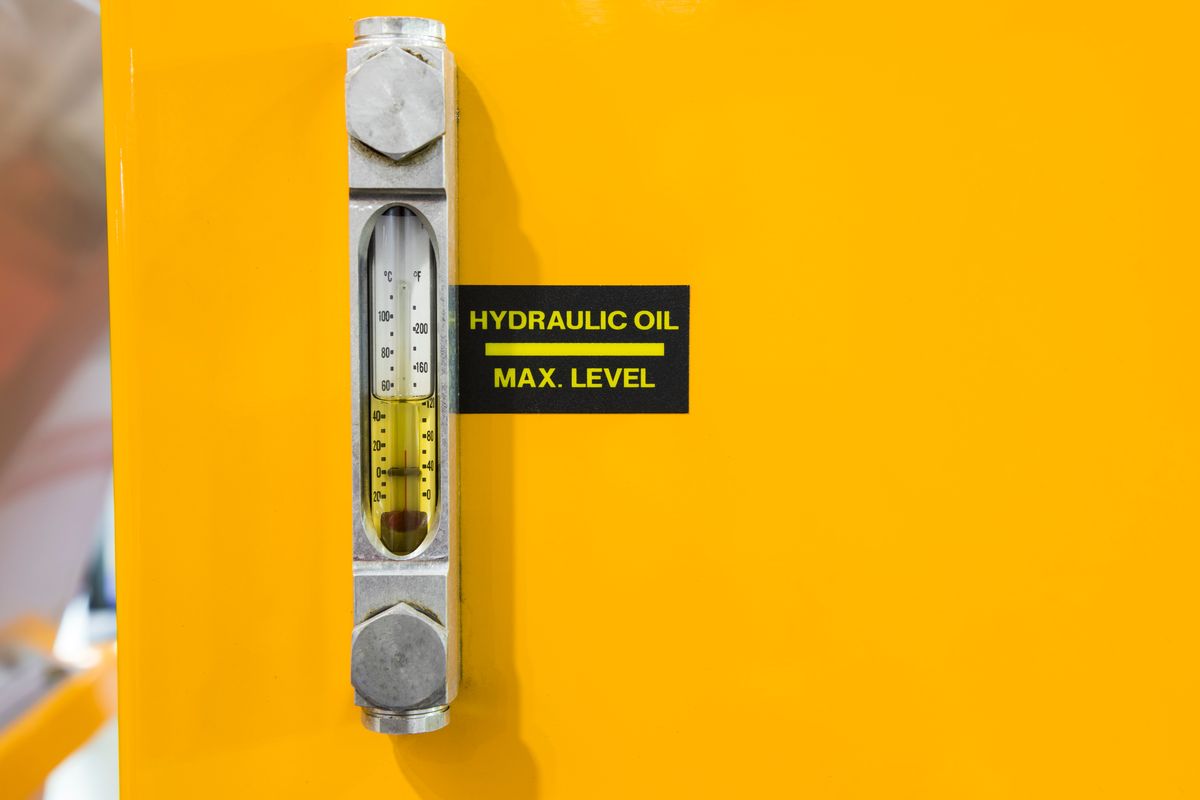
Low fluid or trapped air prevents the lift from building pressure to rise.
Symptoms:
– Motor runs but lift doesn’t go up.
– Movement is sluggish or stops mid-cycle.
– Unusual whining or grinding noise.
Fix:
1. Check fluid level per manufacturer’s spec.
2. Top off with correct hydraulic fluid (e.g., ISO 32).
3. Bleed the system using the manual pump or bleed valve.
4. Operate lift through 3–5 full cycles to purge air.
Always use the fluid type specified—substitutions can damage seals.
Tighten Manual Valve and Adjust Pressure
A loose manual valve causes slow folding or incomplete cycles—indirectly blocking ascent.
Fix:
– Locate the manual valve (usually on the pump).
– Tighten securely.
– Perform a lift pressure adjustment per manual.
After tightening, test both up and down cycles for smooth operation.
Inspect Outboard Barrier Closure
If the outboard barrier doesn’t close fully, the lift may stop during ascent.
Causes:
– Debris in track.
– Misaligned latch.
– Faulty switch behind latch.
Fix:
– Ensure barrier rises vertically and locks.
– Check foot release mechanism—only activates when latched.
– Verify the switch behind the latch is triggered.
– Clean track and ensure free movement.
Test Microswitches and Control Circuits
Diagnose IB Occupied Microswitch (Braun Lifts)

On Braun lifts (e.g., Ford E-450), a faulty IB (Inner Barrier) occupied switch can cut power to the entire system.
Symptom: Lift only works when the switch is manually held. When released, operation stops and remote light goes out.
Potential causes:
– Defective switch (even if new).
– NO/NC terminals reversed during replacement.
– Poor alignment—pad doesn’t press switch within 1–2 inches.
– Damaged wiring under floor.
Diagnostic steps:
1. Use a wiring diagram (e.g., Braun manual page 22).
2. Check for power before and after the switch.
3. Test continuity with a multimeter.
4. Inspect connectors for corrosion or looseness.
Three identical buses failing the same way suggests a design or wiring flaw—not just bad parts.
Inspect Ramp (Apron) Shutoff Switch
This switch stops descent when the ramp touches the ground. If it fails, the lift may stop short, preventing full deployment—and blocking ascent due to incomplete cycle.
Fix:
– Test microswitches:
– Outer barrier raised
– Bridging micro switch
– IB raised switch
– Replace or recalibrate any faulty switch.
Evaluate Motor and Electrical Faults
Check for Failing Motor or Loose Connections
If the lift works intermittently—especially when you pull a strap or press on the motor mount—the motor or its connections are likely failing.
Voltage readings (12V system, car off):
– Red: 12V ✔️
– Green (up): 12V ✔️
– Green (down): 0V ✔️
– Black: 0V ✔️
– Grey: 0V ✔️
Interpretation:
– Voltage is present even when motor doesn’t spin.
– Motor only runs with physical force.
– Once spinning, it lifts weight fine—so load isn’t the issue.
Likely causes:
– Worn motor brushes or internal short.
– Loose or corroded terminals—vibration breaks contact.
– Failing limit switch—shuts off prematurely.
– Loose motor mount—causes intermittent contact.
Next steps:
– Inspect motor terminals—clean and tighten.
– Test motor under load—check for high current draw.
– Bypass control circuit temporarily to test motor directly.
– Examine limit switch alignment.
– Replace motor if brushes are worn.
“Probably the motor is crapping out, or there’s a bad connection.” —framerotblues (verified user report)
Reset and Recalibrate the System
Perform a Full System Reset
After troubleshooting, reset the lift to clear false faults.
Steps:
1. Fully stow the lift manually or with the backup pump.
2. Turn off key switch and reset E-Stop.
3. Cycle power at the breaker.
4. Wait 30 seconds.
5. Restore power and test.
A full reset often clears intermittent errors caused by sensor glitches.
When to Call a Professional
Signs You Need Expert Help
Call a certified technician if:
– Lift keeps beeping after power reset.
– You hear grinding, screeching, or knocking noises.
– Hydraulic fluid is leaking.
– Electrical issues persist after all checks.
– Problem returns after temporary fix.
Recommended contacts:
– ProTégé lifts: Contact Ascention.
– Braun lifts: Request wiring diagram and service bulletin.
– VPLs: Call 101 Mobility or local ADA-certified tech.
Commercial lifts require annual professional maintenance for compliance and safety.
Prevent Future Failures
Monthly Maintenance Checklist
- Inspect safety barriers for obstructions.
- Test E-Stop and key switch function.
- Check hydraulic fluid level.
- Confirm control pendant lights and responsiveness.
- Clean under-platform safety pan.
Train All Users
Ensure everyone who operates the lift knows:
– The correct stow and deploy sequence.
– How to reset safety features.
– Basic troubleshooting steps.
– Never to bypass safety systems.
Keep Records and Manuals
Store:
– Wiring diagrams.
– Service history.
– Manufacturer contact info.
– Notes on recurring issues.
Documentation speeds up professional repairs.
Consider Replacement If…
Replace the lift or upgrade to a wheelchair-accessible van if:
– Repairs are frequent or costly.
– The lift fails mid-air regularly.
– It causes missed appointments or safety fears.
– Parts are no longer available.
Benefits of a new mobility vehicle:
– No more lift breakdowns.
– Modern features like AutoFloor.
– Higher ground clearance.
– Smoother, quieter operation.
– Improved reliability and trust.
Final Note: A wheelchair lift that won’t go up isn’t just a mechanical problem—it’s a threat to independence. By following this guide, you can resolve most issues safely and quickly. But never compromise on safety: never disable sensors, override locks improperly, or delay professional help when needed. Your mobility depends on a system that works—every time.