
Every step, threshold, or curb can be a barrier to independence—but the right wheelchair ramp can open doors to freedom, mobility, and confidence. Whether you’re navigating a home entrance, accessing a vehicle, or ensuring public accessibility, understanding the types of wheelchair ramps is essential for safety and long-term usability.
From lightweight portable models to permanent concrete installations, each ramp type serves a unique purpose. This guide breaks down every major ramp category—threshold, folding, suitcase, telescoping, modular, permanent (wood, concrete, metal), and van-installed—so you can make an informed decision based on your needs, space, budget, and frequency of use. You’ll also learn key selection factors, ADA guidelines, cost ranges, and maintenance tips to ensure lasting performance.
Let’s explore which ramp fits your life—and how to choose one that supports independence for years to come.
Threshold Ramps for Small Elevation Changes
When a half-inch door sill or patio step blocks access, a threshold ramp offers a simple, effective fix—especially in homes where major construction isn’t possible.
Overcome Minor Indoor and Outdoor Obstacles
Threshold ramps are designed to bridge rises between ½ inch and 6 inches, making them ideal for:
– Sliding glass doors
– Entryway sills
– Floor transitions (e.g., carpet to tile)
– Curb cutdowns at garages or patios
Even a small bump can stop a walker or wheelchair in its tracks—“It takes only half an inch bump to stop a walker or wheelchair to a halt.” These low-profile ramps eliminate tripping hazards and allow smooth transitions for wheelchairs, scooters, and walkers.
Choose Between Rubber, Aluminum, and Steel
Material choice affects durability and suitability:
– Rubber: Flexible and slip-resistant; best for indoor use but degrades under UV exposure
– Aluminum: Lightweight, rust-proof, and suitable for both indoor and outdoor use
– Steel: Heavy-duty and durable; typically used in commercial settings
Most models feature beveled edges on both sides for seamless rolling and come in widths from 30 to 48 inches—matching standard doorframes.
Install Fast Without Permits
No construction or permit is required. Installation options include:
– Adhesive bonding (ideal for renters)
– Screw mounting (more permanent)
– Weight-supported (rests in place)
Setup takes minutes, and units can be temporary or semi-permanent. Prices range from $65 to $315, depending on size and material.
✅ Best For: Renters, minor home barriers, and short-term accessibility
❌ Not For: Multi-step entries or steep inclines
Folding Ramps: Portable Access for 1–2 Steps

For flexible, on-the-go access, folding ramps deliver a lightweight solution that’s easy to deploy and transport—perfect for overcoming short staircases or vehicle entry points.
Deploy in Seconds, Store in Your Trunk
Available in bi-fold (two panels) and tri-fold (four panels) designs, folding ramps collapse like an accordion for compact storage. They’re commonly used for:
– Accessing homes with 1–2 steps
– Public buildings without permanent ramps
– Vehicle entry (vans, SUVs)
No tools or installation are needed—just unfold and position.
Built for Strength and Easy Transport
Made almost exclusively from aerospace-grade aluminum, folding ramps balance durability and portability:
– Length: 2–10 feet
– Width: Typically 30 inches (narrower than ADA standard)
– Weight: 15–40 lbs
– Load capacity: 600–1,000 lbs
Most include non-slip surfaces and 2-inch side flanges to keep wheels on track during use.
Understand the Safety Limitations
Despite their convenience, folding ramps:
– Lack handrails
– Are not ADA-compliant
– Require physical strength to carry and position
As one expert notes: “Folding ramps do not have handrails and are not ADA-compliant, so it should only be used for personal use.”
✅ Best For: Travelers, post-surgery recovery, and caregivers
❌ Not For: Commercial use or daily high-frequency access
Suitcase Ramps: Lightweight Travel Solutions
A specialized version of folding ramps, suitcase ramps are engineered for maximum portability—ideal for people who need reliable access across multiple locations.
Carry Like Luggage, Deploy in Seconds
Named for their integrated handle and fold-flat design, suitcase ramps are:
– As light as 15 lbs
– Easy to carry and store
– Perfect for cars, vans, and hotel entrances
They’re a favorite among frequent travelers and caregivers who value quick deployment and compact storage.
Strong Despite Compact Size
- Length: 2–6 feet
- Width: ~30 inches
- Load capacity: Up to 800 lbs
- Material: High-strength aluminum
Even on firm, level ground, they provide stable, slip-resistant access.
✅ Best For: Vacation trips, emergency preparedness, vehicle access
❌ Not For: Wide mobility devices or uneven terrain
Telescoping Ramps for Custom Van Access
Designed specifically for wheelchair-accessible vans, telescoping ramps offer adjustable length and compact storage—ideal for users who need reliable daily vehicle access.
Extend and Retract for Variable Heights
Each ramp consists of two sliding aluminum channels (left and right) that:
– Retract to 3–4 feet for storage
– Extend up to 8–10 feet for use
– Weigh 20–35 lbs total
– Support 800–1,000 lbs
This design adapts to different van floor heights while saving space when not in use.
Require Precise Wheel Alignment
Because the channels align only with the wheelchair’s tires—not the full width—these ramps work best when:
– Wheel positions are consistent
– The user can maintain a straight path
❗ Warning: “Telescoping ramps are not ideal for mobile scooters as the wheels are often not in line with each other.”
✅ Best For: Wheelchair van users needing compact, adjustable access
❌ Not For: Scooters or users with wobbly/wide wheelbases
Modular Aluminum Ramps: Customizable Long-Term Access

For homes needing durable, code-compliant access without permanent construction, modular ramps offer a smart, reusable solution.
Build Any Configuration with Interlocking Sections
Modular systems use prefabricated aluminum parts that connect like puzzle pieces:
– Straight runs
– L-shaped or U-shaped turns
– Switchback designs
– Integrated landings and handrails
You can create custom layouts to fit stairs, uneven ground, or complex entryways.
Meet ADA Standards Without Permits
- Width: 36+ inches
- Slope: 1:12 ratio
- Load capacity: Up to 1,000 lbs
- Surface: Solid or grated with anti-slip ridges
Unlike wood or concrete, modular ramps require no building permit in most areas and can be disassembled and moved to a new home.
Fast Installation, Low Maintenance
Professional installation takes just 1–3 hours. Maintenance includes occasional cleaning and bolt checks. Costs range from $1,000 to $10,000+, with some brands offering lifetime warranties.
✅ Best For: Aging-in-place, complex entries, resale-friendly upgrades
❌ Not For: Ultra-low budgets or purely aesthetic integration
Permanent Ramps: Wood, Concrete, and Metal
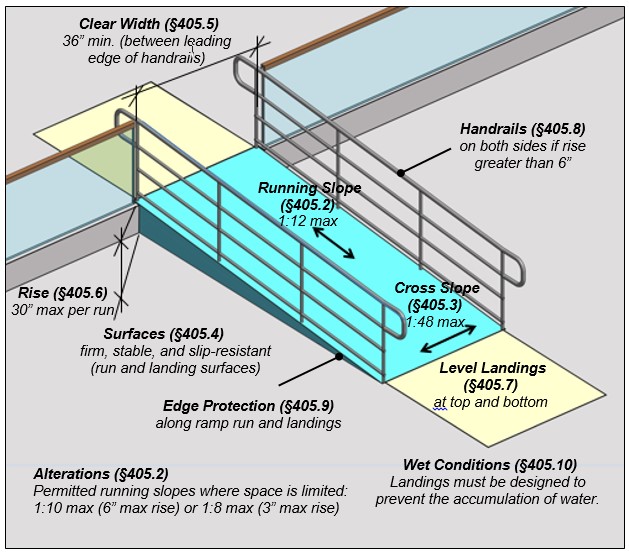
When stability and long-term integration are priorities, permanent ramps provide the most durable solutions—but with higher cost and commitment.
Wood Ramps: Attractive but High Maintenance
Built from pressure-treated 2×6 lumber:
– Can be stained or painted to match home design
– Include handrails and custom finishes
– Support 800–1,000 lbs
But:
– Require permits and inspections
– Take 3–6 weeks to build
– Need annual staining
– Risk of warping or rotting (especially with plywood)
Cost: $2,000–$10,000+
✅ Best For: Homeowners who value curb appeal
❌ Not For: Renters or quick installations
Concrete Ramps: Built to Last
Poured-in-place concrete ramps are the most permanent option:
– Extremely strong and weather-resistant
– Textured (broomed) finish prevents slipping
– Can integrate with foundations
But:
– Require permits and curing time
– May shift or sag if over 15 feet long
– Steel handrails are durable but uncomfortable to grip
Cost: $2,000–$10,000+, often the most expensive
✅ Best For: High-traffic or commercial use
❌ Not For: Temporary needs or budget buyers
Metal Permanent Ramps
Made from steel or heavy-gauge aluminum:
– Welded or bolted on-site
– Used in hospitals, clinics, and government buildings
– Extremely durable but costly to install
✅ Best For: Institutional use
❌ Not For: DIY residential projects
Van-Installed Ramps: Seamless Daily Access
For full-time wheelchair users, van-installed ramps provide the most convenient and secure vehicle access.
In-Floor Ramps: The Gold Standard
- Retract into the van floor when not in use
- Allow full interior mobility
- Operate manually or automatically
- Available in side-entry or rear-entry models
No need to carry or store a separate ramp—access is always ready.
High Investment, High Return
Vehicle modifications cost $10,000–$30,000+ and are not transferable. But for daily drivers, the independence and safety are invaluable.
✅ Best For: Full-time wheelchair users, independent drivers
❌ Not For: Occasional users or those on a tight budget
Compare All Wheelchair Ramp Types
Use this comparison to match your needs with the best ramp:
| Feature | Threshold | Folding | Suitcase | Telescoping | Modular | Wood | Concrete | Van-Installed |
|---|---|---|---|---|---|---|---|---|
| Portability | Low | High | High | High | Medium | None | None | None |
| Installation Time | Minutes | Minutes | Minutes | Minutes | 1–3 hrs | 3–6 wks | 3–6 wks | N/A |
| Permit Required? | No | No | No | No | No | Yes | Yes | N/A |
| ADA Compliant? | Some | No | No | No | Yes | Yes* | Yes* | Yes |
| Weight Capacity | 600–800 lbs | 600–800 lbs | ~800 lbs | 800–1,000 lbs | 1,000 lbs | 800–1,000 lbs | >1,000 lbs | 1,000+ lbs |
| Durability | Medium | Medium | Medium | High | High | Medium | Very High | High |
| Maintenance | Low | Low | Low | Low | Low | High | Low | Medium |
| Cost Range | $65–$315 | $100–$600 | $150–$700 | $300–$900 | $1K–$10K+ | $2K–$10K+ | $2K–$10K+ | $10K–$30K+ |
*If built to ADA code
How to Choose the Right Ramp
Assess Your Needs
- Who uses it? (Wheelchair, scooter, walker?)
- What’s the device width? (30″ minimum, 36″ preferred)
- Is a caregiver involved?
Calculate Rise and Slope
- 1:12 rule: 1 inch rise = 12 inches ramp
- 24″ rise → 24-foot ramp minimum
- Include 5’×5′ landings every 30 feet
Match Ramp to Use Frequency
- Occasional/Travel: Folding, suitcase, telescoping
- Daily/Long-Term: Modular, permanent, van-installed
Plan for the Future
Choose scalable options. Remember: “90% of seniors prefer to remain at home as they age.”
Final Takeaways: Independence Starts with the Right Ramp
The right type of wheelchair ramp does more than bridge a height gap—it bridges the gap between dependence and freedom. Whether you need a $100 folding ramp for weekend trips or a $10,000 modular system for lifelong home access, your choice should reflect real-world needs, safety standards, and future goals.
Key Recommendations:
– Follow ADA guidelines even for private homes
– Test ramps in person when possible
– Consult a certified aging-in-place specialist
– Prioritize non-slip surfaces, edge protection, and proper slope
With so many options available, there’s a ramp for every person, place, and purpose. Choose wisely—and unlock a world of independence.