
Sitting for hours in a wheelchair without proper support can lead to serious health risks—pressure sores, poor posture, pain, and reduced mobility. That’s why choosing the right wheelchair cushion type is not just about comfort; it’s a critical part of long-term health and independence. The ideal cushion redistributes pressure, stabilizes your posture, and prevents skin breakdown, especially over bony areas like the tailbone and hips.
With so many options available—foam, air, gel, and combination cushions—making an informed choice can feel overwhelming. Each wheelchair cushion type offers unique benefits and trade-offs in terms of support, durability, weight, and maintenance. This guide breaks down the most common types, explains how they work, and helps you match the right cushion to your physical needs, lifestyle, and mobility goals.
Foam Wheelchair Cushions: Affordable Support for Low-Risk Users
Foam cushions are the most widely used and budget-friendly option in wheelchair seating. Made from high-resiliency (HR) foam, these cushions offer firm support that helps maintain upright posture and resists shifting during daily use.
Why High-Resiliency Foam Matters
Unlike soft furniture foam that collapses quickly, HR foam is engineered to retain its shape under constant pressure. It provides a stable base that supports pelvic alignment, making it ideal for users with good skin integrity and limited sitting time—typically less than 6 hours per day.
Multi-density foam cushions take this a step further by layering softer foam on top of a firmer base. This design improves pressure distribution while maintaining structural support, reducing the risk of “bottoming out” over time.
When to Replace Foam Cushions
Even the best foam degrades with use. Most foam cushions last 6 to 18 months, depending on body weight and daily sitting duration. Signs it’s time to replace include visible sagging, permanent indentations, or increased discomfort after sitting.
Best for: Short-term use, low-risk users, or those needing basic support with minimal maintenance.
Limitation: Not ideal for prolonged sitting or individuals with limited sensation, as compressed foam can no longer protect against pressure injuries.
Air Wheelchair Cushions: Adjustable Pressure Relief for High-Risk Users
Air-filled cushions use sealed bladders filled with air to conform to the body’s shape and redistribute weight dynamically. Their adjustability makes them a top choice for users with changing physical needs or high risk of pressure ulcers.
Customizable Support for Changing Conditions
You can fine-tune air pressure to match your body weight, posture, or swelling (edema). This adaptability ensures consistent immersion and envelopment—key factors in minimizing peak pressure points. Some models feature interconnected air cells that shift fluidly with movement, offering real-time support.
These cushions are particularly beneficial for individuals with spinal cord injuries, paralysis, or asymmetrical sitting postures.
Watch Out for Punctures and Instability
While highly effective, air cushions are vulnerable to leaks and punctures. A slow leak can go unnoticed, leading to uneven support and poor spinal alignment. Daily inspection and pressure checks are essential.
They also provide less stability than foam, which can be problematic for self-propelling users or those who shift frequently. Over-inflation is another risk—it can increase tissue stress and restrict blood flow, counteracting the cushion’s protective purpose.
Best for: Users at moderate to high risk of pressure sores, especially those with fluctuating swelling or complex postural needs.
Tip: Pair with a protective cover and inspect weekly for wear, especially if used outdoors or in active environments.
Gel Wheelchair Cushions: Long-Lasting Pressure Distribution
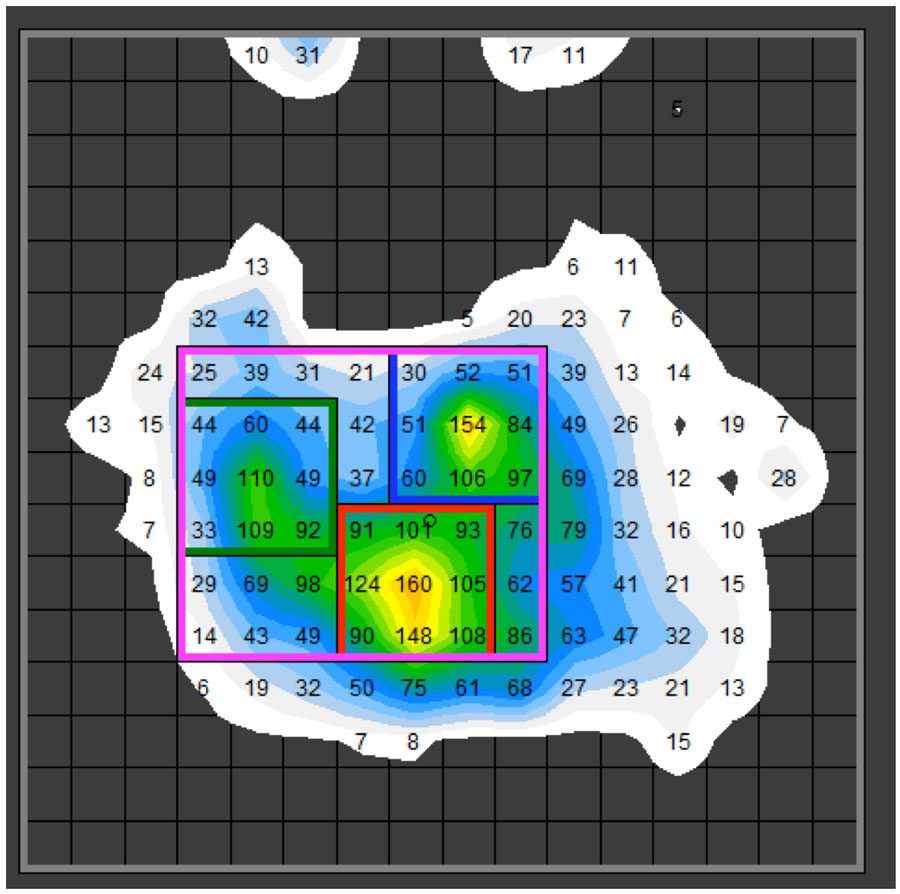
Gel cushions combine a solid foam base with sealed gel inserts—usually silicone or polymer-based—that mold to the body. The gel’s fluid-like properties allow it to absorb and spread pressure across a larger surface area, significantly reducing stress on sensitive tissues.
Superior Protection Against Skin Breakdown
Gel excels at minimizing shear and friction, two major causes of skin damage. Because it maintains its shape and performance over time, gel cushions typically last 3 to 5 years—longer than foam or air options. They don’t require inflation and are less prone to sudden failure.
This makes them ideal for individuals with limited mobility, poor circulation, or a history of pressure injuries.
Trade-Off: Weight and Portability
The main drawback is weight. Gel is the heaviest cushion material, which can make wheelchair transport more difficult—especially when lifting into a car. Consider whether the enhanced protection outweighs the added load.
Pro tip: Knead the gel weekly to prevent material from settling and ensure even pressure distribution.
Best for: Long-term seated users, those with paralysis, or high-risk individuals needing reliable, low-maintenance support.
Combination Wheelchair Cushions: Balanced Support and Pressure Relief
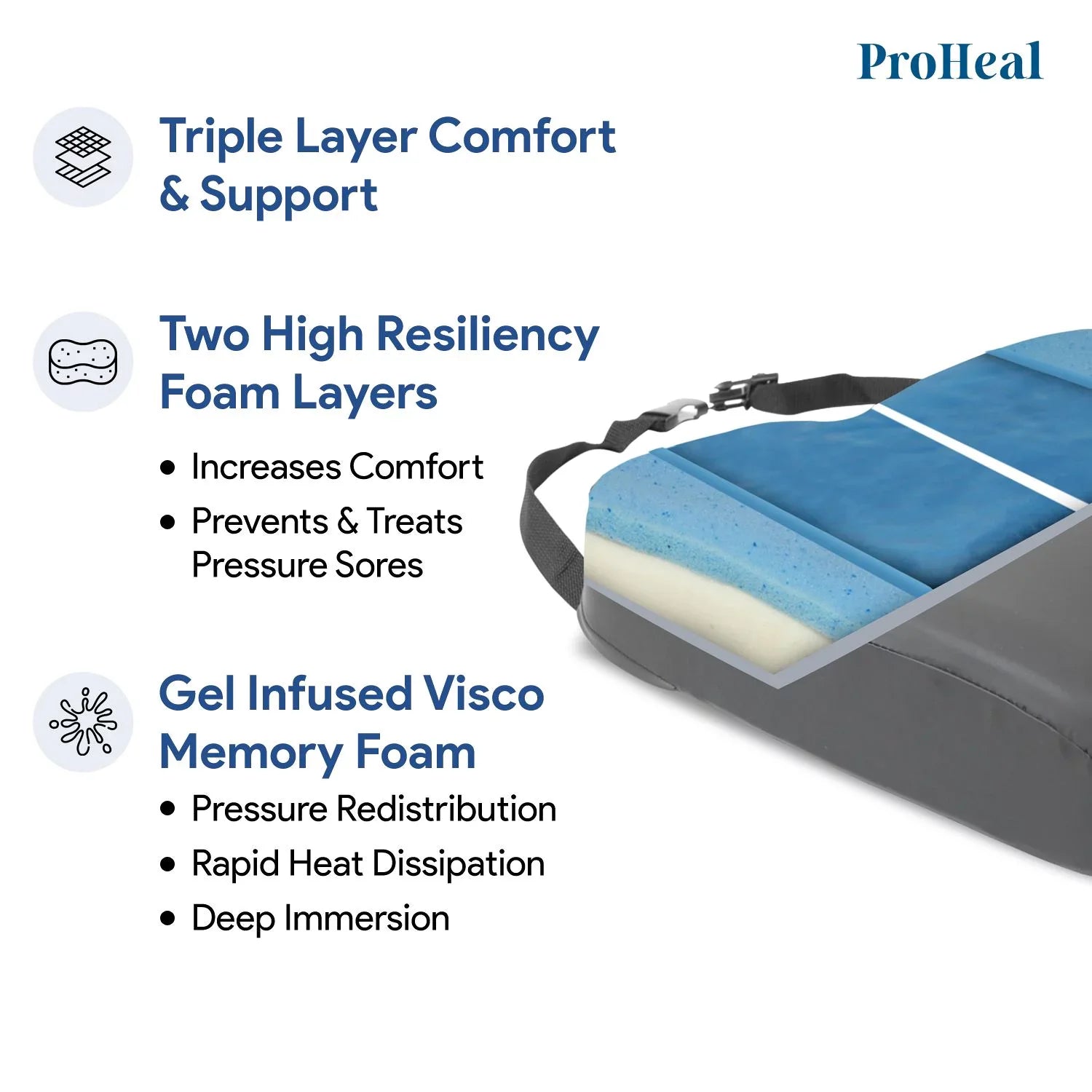
Combination cushions merge materials—typically high-resiliency foam with gel or fluid layers—to deliver both stability and advanced pressure management. These are engineered for users who need more than foam but find full gel or air too heavy or unstable.
How Combo Cushions Improve Daily Comfort
The foam base provides structural support, keeping the pelvis aligned and preventing slouching. The gel or fluid layer on top absorbs micro-movements and cushions bony prominences like the ischial tuberosities (sit bones).
Many models also include features to reduce heat retention—a common issue with solid gel cushions—by incorporating breathable fabrics or open-cell foam layers.
Ideal for Progressive and Complex Conditions
Combo cushions are frequently recommended for individuals with ALS, multiple sclerosis (MS), or cerebral palsy, where seating needs evolve over time. Models like the Libra™ and PSP (Posture Seat Polymer) from Motion Concepts Matrx® offer dynamic support, adapting to subtle shifts in posture and pressure.
Best for: Moderate-to-high risk users who need both comfort and stability for extended sitting.
Broda Seating Cushion Packages: Integrated Support for Enhanced Comfort
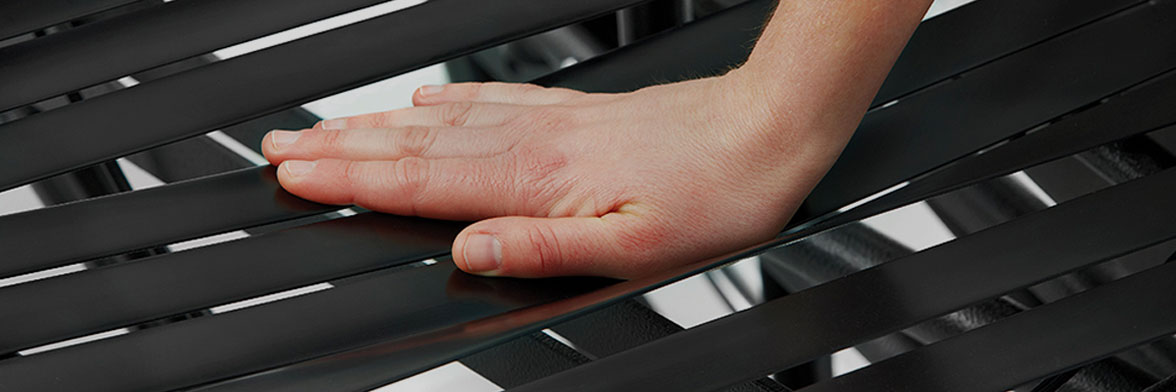
Broda wheelchairs come with Comfort Tension Seating®, a sling-style system that naturally reduces pressure across the seat and back. For additional support, Broda offers a range of compatible cushion packages designed to enhance positioning and skin protection.
PS Cushion: Lightweight and Easy to Maintain
The PS cushion uses lightweight foam with removable, washable covers. It’s a low-profile option that complements Broda’s natural seat contour without adding bulk. Ideal for users who need minimal padding and easy cleaning.
Vi Cushion: Multi-Layer Stability for All-Day Use
With three layers of foam, the Vi cushion delivers enhanced support and durability. It helps maintain pelvic alignment and reduces shear forces, making it suitable for users with mild postural instability or those sitting for long periods.
PSP Cushion: Gel-Enhanced Protection for High-Risk Users
The PSP cushion integrates molded polymer gel into the foam layers, offering superior pressure redistribution and skin protection. It’s recommended for individuals at moderate-to-high risk of pressure injuries due to immobility or thin skin.
Libra Cushion: Dynamic Fluid Support for Complex Needs
The Libra™ cushion uses fluid-filled chambers that adapt to body movements in real time. Fully customizable, it’s ideal for users with asymmetrical posture, severe pressure concerns, or progressive neurological conditions.
Note: Libra and PSP cushions are often prescribed in clinical or long-term care settings due to their advanced support features.
Why Pressure Relief Is Critical for Wheelchair Users
Sitting in one position compresses blood vessels, especially over bony areas. Without proper pressure redistribution, this can lead to:
- Skin breakdown
- Pressure ulcers (bed sores)
- Chronic pain and infection
- Reduced independence
A high-quality wheelchair cushion type combats these risks by:
- Distributing weight evenly
- Reducing peak pressure points
- Minimizing friction and shear
- Managing heat and moisture
Fact: Up to 80% of wheelchair users develop pressure sores at some point. The right cushion can drastically reduce this risk—especially when paired with regular weight shifts and skin checks.
How to Choose the Right Wheelchair Cushion
Selecting a cushion should be a personalized decision based on medical need, lifestyle, and equipment compatibility.
Match the Cushion to Your Risk Level
| Risk Level | Recommended Cushion Type |
|---|---|
| Low (good skin, active, sits <6 hrs/day) | Foam or PS cushion |
| Moderate (some immobility, long sitting) | Gel-foam combo or Vi cushion |
| High (limited sensation, history of sores) | Air, PSP, or Libra cushion |
If you have diabetes, spinal cord injury, or poor nutrition, you’re at higher risk and should opt for advanced support.
Consider Your Lifestyle and Mobility
Ask yourself:
- Do you sit for more than 6 hours daily? → Choose long-term pressure relief (gel or combo).
- Do you self-propel? → Prioritize stability (foam or firm combo).
- Do you travel often? → Avoid heavy or high-maintenance options.
- Do you have incontinence? → Pick a cushion with a fluid-resistant, removable cover.
Ensure Wheelchair Compatibility
A cushion should fit securely without altering seat depth or height. Adding a thick cushion may:
- Raise your seat too high
- Prevent feet from reaching footrests
- Shift your center of gravity, affecting balance
Always measure your wheelchair seat before purchasing and test the fit in person if possible.
Care and Maintenance Tips to Extend Cushion Life
Even the best cushion fails without proper care. Follow these steps to maintain performance and hygiene.
Clean Regularly
- Wipe down daily with a damp cloth and mild soap.
- Use manufacturer-approved disinfectants.
- Never soak or machine wash unless specified.
Most cushions come with removable, washable covers—replace every 1–2 years or when damaged.
Inspect and Monitor Performance
Check weekly for:
- Tears, leaks, or worn seams
- Loss of firmness or “bottoming out”
- Uneven wear patterns
Replace immediately if you notice redness, sores, or changes in posture.
Rotate and Replace as Needed
If you use multiple wheelchairs, rotate cushions to even out wear. Replace based on type:
- Foam: every 6–18 months
- Air: every 1–3 years (or after leaks)
- Gel and combo: every 3–5 years
Final Note
The right wheelchair cushion type does more than add comfort—it protects your skin, supports your spine, and enhances independence. Whether you choose foam, air, gel, or a combination, prioritize medical need over price or convenience.
Always consult an occupational therapist or seating specialist before purchasing. They can assess your posture, pressure points, and mobility to recommend the best option.
With proper selection and care, your cushion can provide years of safe, comfortable seating—helping you focus on living, not just sitting.