
If you or a loved one relies on a wheelchair, staying secure and properly positioned isn’t just about convenience—it’s a critical part of daily safety. Types of wheelchair seat belts are designed to prevent falls, support posture, and improve confidence during movement. Yet many users stick with the basic belt that came with their chair, unaware that specialized options exist to match different mobility levels, medical conditions, and lifestyles.
Using the wrong type of seat belt can lead to discomfort, skin irritation, or even serious injury during sudden stops or transfers. Worse, some belts marketed for postural support are dangerously misused in vehicles—despite not being crash-tested or designed for impact protection. With so much at stake, understanding the full range of wheelchair seat belt types is essential for caregivers, clinicians, and users alike.
This guide breaks down every major type of wheelchair seat belt—from simple lap belts to full harness systems—along with key features, ideal use cases, safety standards, and maintenance tips. You’ll learn how to choose the right belt based on individual needs, avoid common mistakes, and ensure both comfort and safety across environments.
Lap Belts: Two-Point Stability
The most widely used wheelchair restraint, lap belts (also known as two-point seat belts) provide basic pelvic stabilization by securing across the hips or upper thighs.
How Lap Belts Work
A lap belt connects at two anchor points on the wheelchair frame, typically near the seat base or side rails. It restricts forward sliding during movement but allows full upper body freedom, making it ideal for users with strong trunk control.
These belts often feature adjustable lengths and quick-release buckles—some with push-button mechanisms for independent use. Many models come in padded versions to reduce pressure and increase comfort during prolonged sitting.
Who Should Use a Lap Belt?
- Individuals with good upper body strength
- Those who transfer independently
- Users needing light support during indoor mobility
They’re commonly used in homes, offices, or low-activity settings where terrain is flat and movement is slow.
Key Features to Look For
- Adjustable fit to ensure snugness without restriction
- Padded webbing to prevent skin breakdown
- Quick-release buckles for independence
- Durable, creep-resistant materials like polyester
Pro Tip: Position the belt across the pelvis—not the abdomen—to avoid restricting breathing or increasing abdominal pressure.
Limitations
- Offers no upper body support
- Inadequate for users with balance issues or high fall risk
- Not safe for vehicle use unless part of a certified transport system
Shoulder Belts: Three- and Four-Point Support
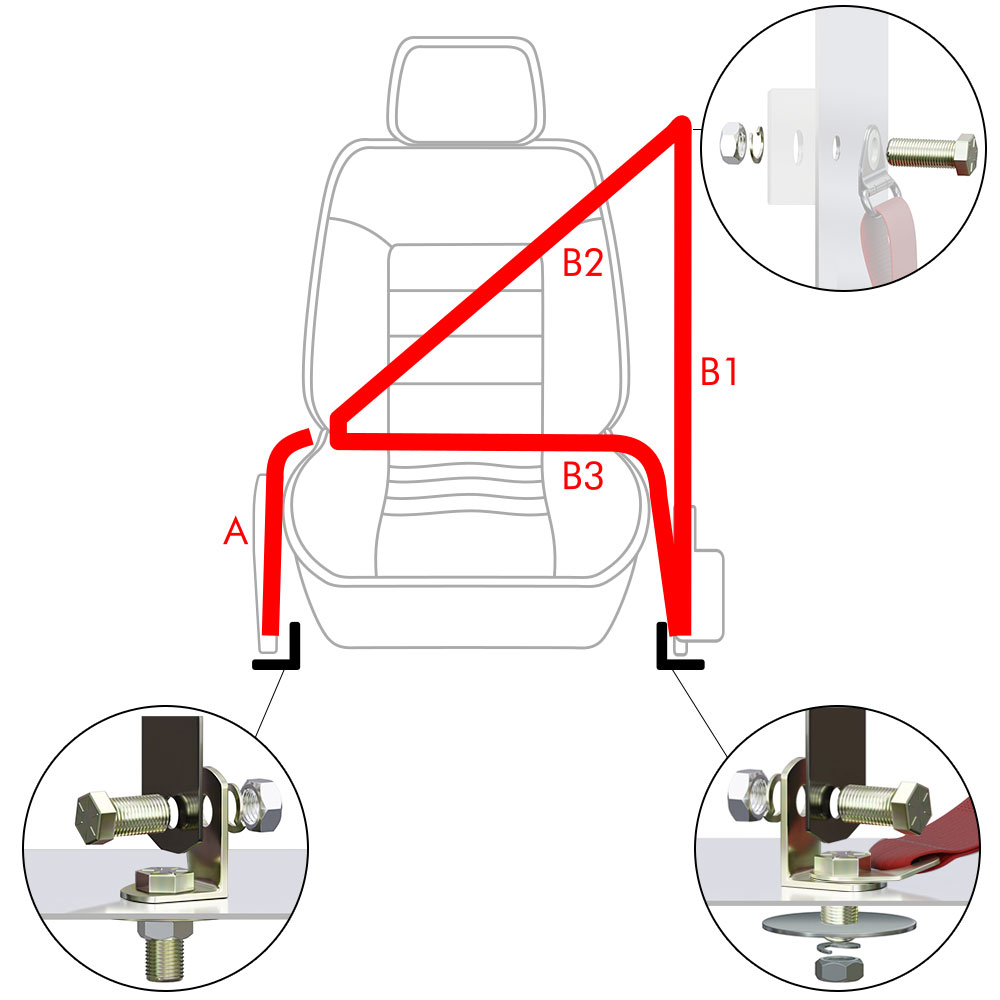
For enhanced upper body control, shoulder belts add diagonal chest straps that work in tandem with a lap belt to form three- or four-point systems.
How Shoulder Belts Improve Posture
A three-point system uses one shoulder strap anchored above the shoulder and connected to a lap belt. A four-point system adds a second strap for symmetrical support, reducing rotational displacement and helping prevent forward slumping.
These belts are especially beneficial during long sitting periods or when navigating uneven terrain, such as outdoors or in power wheelchairs.
When to Choose Shoulder Belts
- Moderate trunk weakness
- Active community use
- Fatigue-related postural collapse
They’re frequently prescribed for individuals with conditions like multiple sclerosis or muscular dystrophy who experience progressive fatigue.
Design Features That Matter
- Adjustable sliders for precise fit
- Padded or breathable shoulder straps to reduce chafing
- Open-chest designs that buckle behind the back (e.g., Bodypoint Trimline) to allow chest expansion
- Rear-mounted buckles to prevent self-removal in users with cognitive impairments
Common Mistakes to Avoid
- Over-tightening, which can restrict breathing or cause discomfort
- Using non-certified belts in vehicles—most are for positioning only
- Poor anchor placement, leading to twisted or ineffective straps
Harness-Style Belts: Full Torso Control
For users with significant postural instability, harness-style belts offer maximum upper body support through multi-point anchoring and dynamic tensioning.
What Makes a Harness Different?
Unlike simpler belts, harness systems (often 4+ points) wrap around the chest, shoulders, and sometimes the abdomen. They’re designed for individuals who cannot maintain an upright sitting position without assistance.
These are medical positioning devices, not restraints, and should be prescribed based on clinical need.
Who Needs a Harness?
- People with cerebral palsy, spinal cord injuries, or neuromuscular diseases
- Those who slump forward, lean sideways, or rotate in the seat
- Users in rehabilitation or long-term care settings
They help maintain alignment for feeding, communication, and pressure relief.
Key Benefits
- Prevents forward collapse, lateral leaning, and rotation
- Distributes pressure over a larger area
- Supports respiratory function when properly fitted
- Can integrate with air-cell inflation systems for adjustable support
Risks and Considerations
- Difficult to don/doff independently—often requires caregiver help
- Skin breakdown risk if too tight or poorly padded
- Not crash-tested—never use in vehicles
Expert Note: Always involve an occupational therapist to assess fit and medical necessity.
Combination Lap and Shoulder Belts: Integrated Kits

For balanced support, combination kits merge lap and shoulder belts into a single, coordinated system—ideal for users who need more than a lap belt but aren’t ready for a full harness.
How Integrated Systems Work
These kits include:
– A pelvic stabilizing lap belt
– One or two shoulder straps
– A unified buckling mechanism (often front- or side-release)
They offer a streamlined look and easier operation than mixing separate components.
Ideal Use Cases
- Pediatric wheelchair users needing growth-adjustable support
- Transitional users moving from independence to assisted mobility
- Community travelers requiring reliable, all-day stability
Top Features
- Modular attachments for customization
- Swivel buckles to prevent twisting
- Quick-disconnect hardware for transfers
Example: The Dynaform Chest Support: One-Piece Buckle ($123.92) supports the chest while allowing shoulder rotation—perfect for active users.
Padded Seat Belts: Comfort for Long-Term Use
Standard webbing can cause friction and discomfort over time. Padded seat belts solve this with built-in foam or neoprene layers.
Why Padding Matters
- Reduces skin shear and chafing
- Prevents pressure sores in immobile users
- Increases user compliance due to improved comfort
Padding is typically 1 inch thick and encased in washable, breathable fabric.
Best Models
- Bodypoint Evoflex Padded Pelvic Stabilizer Belt ($103.93): Features pivot capability for easier transfers
- DeRoyal Heavy Duty Wheelchair Belt ($75.24): Durable foam padding for daily wear
- Front-Release Padded Wheelchair Belt ($59.31): Ideal for self-transfer users
Who Should Consider Padded Belts?
- Users who sit for 8+ hours daily
- Those with sensitive skin or existing pressure injuries
- Anyone reporting discomfort with standard belts
Warning: Replace if padding loses shape or compresses under load.
Chest Belts: Anterior Trunk Support
When forward flexion is a concern, chest belts provide horizontal support across the mid-to-upper torso.
Function and Placement
A chest belt wraps around the chest and anchors to the wheelchair’s lateral or posterior frame. It’s often used with a lap belt to prevent slumping.
Unlike shoulder harnesses, chest belts don’t cross the shoulders—making them less restrictive but also less stabilizing.
Benefits
- Improves seated posture
- Reduces fatigue from constant trunk correction
- Supports weak abdominal muscles
Design Tips
- Look for elastic or stretchable zones to allow breathing
- Use hook-and-loop closures for easy adjustment
- Avoid placing too low—should sit at nipple line or higher
Example: The Bodypoint Dynamic Monoflex Chest Support Belt ($108.67) offers flexible yet strong support with a thumb hole for easier fastening.
Bath and Shower Chair Belts: Wet Environment Safety
Hygiene routines increase fall risk due to wet surfaces. Bath belts are designed to perform where regular belts fail.
Why Standard Belts Don’t Work in Showers
- Absorb water and take hours to dry
- Promote mold and mildew growth
- Degrade faster due to moisture exposure
Bath belts solve this with water-permeable, quick-drying materials.
Key Features
- Made from Aeromesh or similar porous fabrics
- Mildew-resistant and easy to clean
- Often portable—usable on both shower chairs and wheelchairs
Top Picks
- Aeromesh Rapid-Dry Shower Chair Bath Belt (Bodypoint, $83.78)
- Shower Chair and Wheelchair Safety Belt ($40.18)
Pro Tip: Hang to dry after every use—never store damp.
Ankle and Calf Straps: Lower Limb Stability
While seat belts focus on the trunk, ankle and calf straps secure the legs to prevent foot drop, scissoring, or leg migration.
Why Legs Need Restraint
- Prevents feet from slipping off footrests
- Reduces risk of contractures and tissue damage
- Supports proper lower limb alignment
These are especially important for users with spasticity or flaccid paralysis.
Design and Function
- Wrap around ankles or calves
- Attach to footplates or frame
- Often include stretch zones for circulation
Example: Bodypoint Ankle Huggers ($137.50) feature an Achilles flex-zone to protect tissue during movement.
Pairing with Seat Belts
Use ankle straps in conjunction with pelvic and trunk supports—not as a substitute. Together, they create a complete postural management system.
Matching Belts to User Needs
Choosing the right belt depends on more than preference—it’s about matching function to ability.
| User Profile | Recommended Belt Type |
|---|---|
| Independent, strong trunk | Two-point lap belt |
| Mild trunk instability | Lap + chest belt or four-point system |
| Severe postural control issues | Full harness or multi-point support |
| Pediatric users | Adjustable padded or lightweight harness |
| Elderly with fall risk | Lap belt with optional chest support |
Always consult an occupational therapist for personalized assessment.
Safety: Medical Belts vs. Vehicle Restraints

This is the most critical distinction: a wheelchair seat belt is not a car seat belt.
Why Medical Belts Aren’t Crash-Tested
- Anchored to the wheelchair frame, not the vehicle
- Not designed to withstand crash forces
- May fail under impact, leading to ejection or injury
For Safe Vehicle Transport
Use a WTORS (Wheelchair Tie-Down and Occupant Restraint System) that includes:
– Four-point wheelchair securement (to vehicle floor)
– Automotive-grade lap and shoulder belt (anchored to vehicle)
– FMVSS 209 or ISO 10542 compliance
Never rely on wheelchair-mounted-only belts during travel.
Installation and Maintenance Tips
Even the best belt fails if installed or maintained poorly.
Proper Installation Steps
- Check manufacturer instructions
- Use secure anchor points (grommets, brackets, or mounts)
- Ensure straps lie flat—no twisting
- Test stability before regular use
Most wheelchairs support aftermarket belts with minimal modification.
Maintenance Checklist
- Inspect monthly for frayed webbing or loose stitching
- Test buckles for smooth operation
- Clean regularly with mild soap and water
- Air dry completely—especially padded or Aeromesh belts
- Replace immediately if damaged
Never use bleach or solvents—they degrade materials.
Avoiding Restraint Misuse
Seat belts are safety aids, not behavioral controls.
Ethical Guidelines
- Never use belts to prevent wandering or self-injury without clinical justification
- Document use in care plans and review regularly
- Involve families and therapists in decisions
Restraint misuse violates patient dignity and can lead to legal consequences.
Final Note: The right type of wheelchair seat belt enhances safety, comfort, and independence. From simple lap belts to advanced harnesses, each serves a unique purpose. Match the belt to the user’s needs, prioritize comfort and adjustability, and never use postural supports in vehicles. When in doubt, consult a mobility specialist—because safety isn’t one-size-fits-all.