
Every time a wheelchair user enters a vehicle, safety starts with one crucial step: securing the chair properly. Without a reliable wheelchair tie-down system, even a minor jolt can lead to serious injury. These systems are not optional extras—they’re essential safety devices that stabilize the wheelchair and protect the occupant during transit. Whether you’re a passenger, driver, or caregiver, understanding the types of wheelchair tie-downs is key to making an informed choice that supports independence, safety, and convenience. From basic manual straps to fully automated docking solutions, this guide explores every major type of securement system, how they work, and which one fits your lifestyle.
Manual Tie-Down Systems: The Foundation of Wheelchair Securement
Manual tie-downs are the most widely used and budget-friendly option for securing wheelchairs in vehicles. These systems rely entirely on human effort to attach and tighten the straps—no motors, no automation—just proven mechanical strength and simplicity.
How 4-Point Manual Systems Work
A standard manual setup uses four separate straps—two connected to the front of the wheelchair and two to the rear. Each strap attaches at one end to a floor-mounted anchor, such as D-rings or track fittings, and at the other end to a secure point on the wheelchair frame. Once attached, you tighten the straps using either a ratchet mechanism or a cam buckle, manually removing all slack.
For maximum crash protection, straps must be installed at a 45° angle from the wheelchair to the floor anchor. This diagonal pull ensures optimal resistance during sudden braking. Attaching straps horizontally—by connecting them too low on the chair—creates a weak, ineffective hold that increases the risk of tipping or sliding.
Identifying the Right Attachment Points on Your Wheelchair
Always connect straps to non-removable, structural parts of the wheelchair. Ideal attachment points include:
– The main frame beneath the seat
– Rear axle supports or wheel brackets
– Fixed footrest mounting brackets
Never attach to armrests, trays, oxygen tanks, or any detachable component—these can break off during a collision, rendering the securement useless.
Pros and Cons of Manual Systems
Advantages:
– Lowest upfront cost ($200–$500)
– No power or complex installation required
– Works with nearly any wheelchair and vehicle
– Proven reliability when used correctly
Disadvantages:
– Requires caregiver assistance for most users
– Time-consuming to apply and remove
– Straps can tangle or obstruct entry/exit
– Physical effort needed to tighten ratchets or cam buckles
Who Should Use Manual Tie-Downs?
These systems are best suited for infrequent travelers or those on a tight budget. They’re ideal for passenger use only and are commonly found in family vehicles, modified minivans, or community transport. If you have regular assistance during travel, a manual system offers dependable protection without the high cost of automation.
Pro Tip: Practice your securement routine regularly. The more familiar you are with the process, the faster and safer it becomes.
Retractable Tie-Down Systems: Faster, Smarter, and Tangle-Free

Retractable tie-downs offer a significant upgrade in user experience over manual systems. They combine speed, convenience, and automatic retraction—ideal for those who value efficiency and ease of use.
QRT and QRT Max: Leading Retractable Models
Brands like Q’Straint dominate this category with popular models such as the QRT Deluxe and QRT Max Slide Click Combo. These systems feature spring-loaded housings mounted on floor tracks, allowing the straps to automatically retract when not in use.
Each system includes:
– Four retractable straps (2 front, 2 rear)
– Snap hooks for quick attachment
– Adjustable floor track mounting for flexibility
How to Use Retractable Straps
- Pull the front and rear straps from their housings.
- Attach each hook to secure points on the wheelchair.
- The built-in tensioner keeps the strap taut and secure.
- After unhooking, the strap retracts automatically into its housing.
Some models allow you to slide the housing along the track for easier access during entry and exit, improving usability and space management.
Benefits Over Manual Systems
- Faster setup and release
- No tangled straps
- Less physical effort required
- Easier for semi-independent users
- Cleaner, more organized vehicle interior
Limitations to Keep in Mind
- Higher price range ($800–$1,500)
- Still not suitable for driving positions
- Requires regular maintenance to prevent jamming
- Needs floor tracks, not just D-rings
Ideal Users for Retractable Systems
If you travel frequently and want quicker, easier securement with less physical strain, retractable systems are an excellent middle ground. They’re perfect for passengers with moderate mobility who want faster independence but aren’t ready to invest in full automation.
Expert Note: The QRT series is widely praised for combining affordability with smart design—making it a top choice for mid-range users.
Automatic Docking Systems: Full Independence on the Go
Docking systems represent the pinnacle of wheelchair securement technology—offering full automation, independence, and the ability to drive from your wheelchair.
How Q170 and EZ Lock Systems Work
Instead of straps, docking systems use a mechanical cradle or lock built into the vehicle floor. A compatible bracket is installed on the wheelchair frame. When you roll into position, the system automatically engages, locking the chair securely in place.
Popular models include:
– Q170 Automatic Docking System
– EZ Lock
– Kai Mobility docking bases
To release, press a deactivation pad—but only when the vehicle is turned off. This built-in safety feature prevents accidental disengagement while driving.
Key Components of Docking Systems
- Floor-mounted docking station (V-shaped or U-shaped)
- Wheelchair-mounted bracket or pin
- Powered or spring-loaded locking mechanism
- Deactivation button or footpad
Installation requires precise alignment and professional calibration to ensure safe, reliable operation.
Advantages of Full Automation
- No straps to handle
- Complete independence—no caregiver needed
- Fastest securement method available
- Enables wheelchair users to drive from their own seat
- Clean, uncluttered interior
Drawbacks and Requirements
- Most expensive option ($2,000–$4,000+, including installation)
- Requires permanent modification to the wheelchair
- Limited compatibility—only works with specific chairs
- Needs a lowered-floor van or full-size accessible vehicle
Who Benefits Most?
These systems are ideal for independent drivers or users who prioritize autonomy. If you want to get in, lock in, and go—without help—docking systems are a worthwhile investment.
Safety First: Always fasten your lap and shoulder seatbelt before activating the docking sequence.
Specialized Systems: Meeting Unique Needs
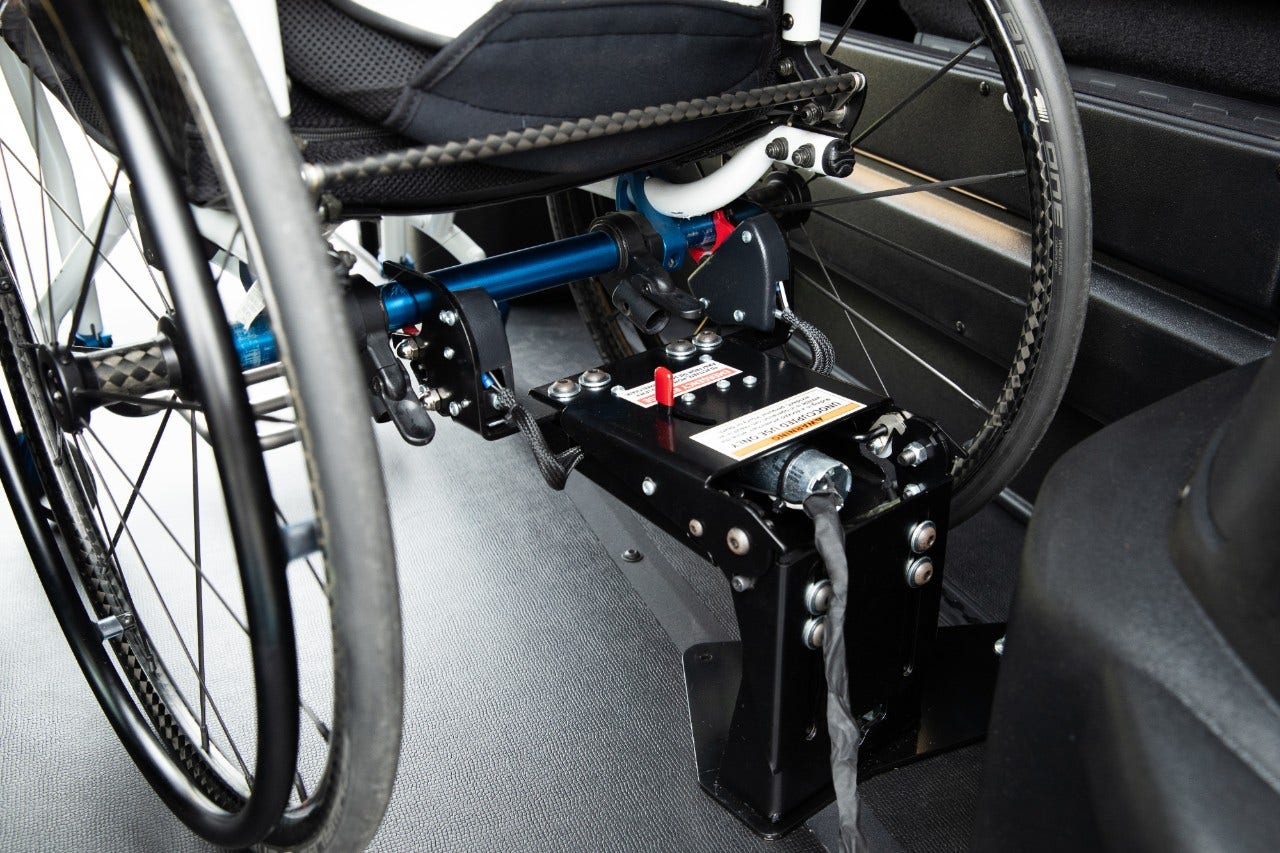
Beyond the standard three types, specialized systems address niche requirements—especially for transporting unoccupied or stored wheelchairs.
Unoccupied Wheelchair Restraint (UWR) System
The UWR system is the world’s first powered-release tie-down designed to secure folded or stored wheelchairs. It’s ideal for ambulances, fleet vehicles, or multi-user environments.
Key Features:
– Secures wheelchairs when not in use
– Requires no permanent modifications to the chair
– Powered release for quick access
– Compatible with full-size vans and lowered-floor vehicles
This system fills a critical gap: safely storing mobility devices without compromising space or safety.
Modified Wheelchair Locking Systems
Some automatic systems require custom brackets, bolts, or pins attached directly to the wheelchair. Examples include setups for Kai Mobility chairs or integration with the Q170 docking station.
Important Considerations:
– May void wheelchair warranty
– Affects resale value
– Installation must be done professionally
While effective, these modifications should be weighed carefully—especially if you plan to upgrade or sell your chair later.
Choosing the Right System: Key Factors to Consider
Your ideal tie-down system depends on more than just price. Consider your mobility level, travel frequency, vehicle type, and need for independence.
Compare at a Glance
| Feature | Manual | Retractable | Docking |
|---|---|---|---|
| Cost | $ | $$ | $$$ |
| Ease of Use | Low | Medium-High | Very High |
| Independence Level | Needs Help | Minimal Help | Fully Independent |
| Installation | Simple | Moderate | Professional Required |
| Chair Modifications | None | None | Usually Required |
| Driving Position Support | No | No | Yes |
| Maintenance Needs | Low | Medium | Medium-High |
Match the System to Your Needs
- On a Budget? → Choose manual camover systems.
- Want Faster Setup? → Go with retractable QRT models.
- Need to Drive from Your Chair? → Invest in a docking system like Q170.
- Transporting Unused Chairs? → Consider the UWR system.
Your daily routine should guide your decision—not just the features on paper.
Vehicle Compatibility and Installation Tips

Not all systems work in every vehicle. Matching your system to your van or minivan is essential for safety and function.
What Each System Requires
- Manual Systems: Need floor D-rings or anchor loops. Can be installed in most modified vehicles.
- Retractable Systems: Require floor tracks for mounting housings. Found in many WAVs (Wheelchair Accessible Vehicles).
- Docking Systems: Need precisely aligned floor bases and often a lowered floor. Best in full-size vans like Ford Transit or BraunAbility-modified vehicles.
Pre-Equipped Vehicle Options
Companies like BraunAbility and United Access sell vehicles pre-installed with various tie-down systems. You can choose:
– Chrysler Pacifica with QRT retractable
– Toyota Sienna with manual anchors
– Full-size vans with Q170 docking stations
Pre-installed systems ensure proper fit and compliance with safety standards.
Warning: Never attempt DIY installation of retractable or docking systems. Misalignment can cause failure during a crash.
Safety Best Practices for All Systems
No matter which wheelchair tie-down system you use, safety depends on correct usage every time.
Always Use a Seatbelt
A secured wheelchair means nothing without an occupant restraint. Always wear a lap and shoulder seatbelt—separate from the chair’s tie-downs.
Maintain Proper Strap Angles
For manual and retractable systems:
– Keep straps at a 45° angle
– Avoid side-to-side pulls
– Ensure front and rear straps oppose each other for balanced tension
Inspect Equipment Regularly
Check for:
– Frayed or worn straps
– Damaged hooks or buckles
– Loose floor anchors
– Sticky or slow retractors
Replace parts immediately if damage is found.
Follow Manufacturer Instructions
Each system has specific guidelines for:
– Weight limits
– Attachment points
– Operating sequences (especially for docking)
Deviating from instructions can void warranties and compromise safety.
Pro Tip: Keep a checklist posted in your vehicle to ensure nothing is missed before driving.
Market Leaders and Where to Buy
Several trusted brands lead the wheelchair securement market, offering systems and vehicles tailored to different needs.
Top Suppliers
- Q’Straint: Manufacturer of QRT and Q170 systems. Known for durability and innovation.
- BraunAbility: Sells and installs accessible vehicles with integrated tie-downs.
- United Access: Offers new and used WAVs with various securement options.
- EZ Lock & Kai Mobility: Specialize in docking-compatible hardware and wheelchairs.
Price Ranges (Including Installation)
- Manual Tie-Downs: $200–$500
- Retractable Systems: $800–$1,500
- Docking Systems: $2,000–$4,000+
- UWR System: $1,000–$3,000 (varies by configuration)
Many providers offer financing, and some costs may be covered by insurance or veterans’ benefits.
Final Note: The right wheelchair tie-down system enhances safety, independence, and peace of mind. Whether you choose a simple strap setup or invest in automation, consistency and correct use matter most. Consult a mobility specialist from BraunAbility or United Access to test options in person. Once you find the right fit, practice until securement feels effortless—because safe travel starts long before the engine turns on.